Best Saltwater Cast Nets: The Complete Buying Guide for Serious Anglers
Find the perfect cast net for bait fishing in the surf, flats, and beyond
📋 In This Guide
Whether you’re chasing redfish on the Carolina flats, targeting snook in the mangroves, or loading up on mullet from the surf, live bait is king in saltwater fishing — and nothing fills a livewell faster than a well-thrown cast net. But not all cast nets are created equal, and buying the wrong one for saltwater conditions can mean fraying lines, corroded weights, and bait that escapes before you ever reach your spot.
This saltwater cast net buying guide breaks down everything you need to know: mesh size, net radius, lead weight per foot, monofilament vs. nylon construction, and which brands consistently deliver for saltwater anglers. We’ve researched top-rated options available at Amazon, Bass Pro Shops, West Marine, and specialty tackle retailers to bring you the most complete comparison available.
🌊 Why Cast Nets Matter for Saltwater Fishing
In saltwater environments, fresh live bait is almost always superior to frozen or artificial alternatives. Species like tarpon, snook, striped bass, and Spanish mackerel are notoriously line-shy and respond dramatically better to lively threadfin shad, pilchards, finger mullet, or live shrimp. A quality saltwater cast net lets you gather bait on-site — saving money and dramatically improving your catch rates.
Cast nets designed specifically for saltwater use feature corrosion-resistant components, UV-stabilized mesh, and heavy enough lead weights to sink quickly through strong tidal currents. A freshwater cast net thrown into saltwater will degrade quickly and won’t sink fast enough when bait schools are running deep.
🔍 Key Factors When Buying a Saltwater Cast Net
1. Net Radius (Size)
Cast net radius is measured in feet and refers to the radius of the open net when fully deployed. A 6-foot radius net opens to a 12-foot diameter circle. For most saltwater anglers, a 6–8 foot net hits the sweet spot — large enough to cover a good area over bait schools, but still manageable to throw from a kayak or skiff. Larger 10–12 foot nets are for experienced throwers targeting big mullet schools from the bank or a dock.
2. Mesh Size
Mesh size determines what bait species you can catch. The most common saltwater mesh sizes are: 3/8 inch for pilchards, small shrimp, and glass minnows; 1/2 inch as a general-purpose size for finger mullet and pinfish; and 5/8 inch for larger mullet, croaker, and greenbacks.
3. Lead Weight Per Foot
More lead means faster sinking — critical in tidal current or when bait is holding deep. Look for at least 1 lb. of lead per foot of radius for saltwater use. Deep water or strong current situations call for 1.5 lbs/ft or more. Budget nets often skimp here, causing baits to scatter before the net sinks.
4. Monofilament vs. Nylon Mesh
Monofilament nets are nearly invisible in the water and typically sink faster — ideal for spooky, clear-water species. Nylon nets are more durable, tangle less, and hold up better over years of hard saltwater use. Many experienced anglers prefer mono for finesse situations and nylon for heavy-duty, high-volume bait gathering.
5. Swivel & Handline Quality
In saltwater, a cheap swivel corrodes in a season. Look for stainless steel or brass swivels and a thick, UV-resistant handline. The braille lines (the lines that close the net) should be secured with tight, marine-grade knots.
✅ Monofilament Pros
- Near-invisible in clear water
- Faster sink rate
- Better for spooky, shallow bait
- Lighter overall
⚠️ Monofilament Cons
- Tangles more easily
- UV degradation over time
- Less durable than nylon
- Requires more careful storage
📊 Top Saltwater Cast Nets — Comparison Table
| Net / Brand | Radius | Mesh | Lead Wt. | Material | Best For | Rating |
|---|---|---|---|---|---|---|
| Betts Old Salt Best Overall | 8 ft | 3/8″ | 1 lb/ft | Mono | Pilchards, shrimp, flats | ★★★★★ |
| Calusa Pro Series Premium | 10 ft | 1/2″ | 1.5 lb/ft | Mono | Deep water, strong current | ★★★★★ |
| Ahi USA 700 Series | 6 ft | 3/8″ | 1 lb/ft | Nylon | Beginners, docks, piers | ★★★★☆ |
| Betts Hi-Vis Spin Budget Pick | 6 ft | 1/2″ | 3/4 lb/ft | Nylon | Mullet, casual use | ★★★★☆ |
| Ahi USA 600 Mullet | 8 ft | 5/8″ | 1 lb/ft | Nylon | Mullet, croaker, large bait | ★★★★☆ |
| Sea Striker Cast Net | 7 ft | 3/8″ | 1 lb/ft | Mono | All-around saltwater | ★★★★☆ |
🏆 Our Top Picks: In-Depth Reviews
🥇 Betts Old Salt Premium Cast Net — Best Overall Saltwater Cast Net
The Betts Old Salt is the go-to cast net for Florida and Southeast saltwater anglers for good reason. The monofilament mesh is nearly invisible in clear flats water, making it ideal for spooky pilchards, finger mullet, and live shrimp. The 1 lb-per-foot lead weight gives it a fast, decisive sink with a full, open spread — critical when you’re throwing over nervous bait schools on the flats.
The swivel is stainless steel and the handline is thick and comfortable for repeated throws. After two seasons of saltwater abuse, it holds up far better than cheaper alternatives. Available in multiple mesh sizes and radii — the 8-foot, 3/8″ mesh version is our top recommendation for most coastal anglers.
🥈 Calusa Cast Nets Pro Series — Best Premium Saltwater Cast Net
Hand-tied in Florida, the Calusa Pro Series cast nets are the choice of professional bait guides and tournament anglers along the Gulf Coast. The extra lead weight — 1.5 lbs per foot — gives this net an explosive, fast sink that closes out bait even in 4–6 feet of moving water. The braille lines are tied with remarkable precision, ensuring the net opens fully and closes cleanly with every throw.
It’s a significant investment compared to mass-market nets, but for serious anglers who depend on live bait, it pays for itself in the first season. Available through specialty saltwater tackle shops and online retailers.
🥉 Ahi USA 700 Series — Best Cast Net for Beginners
If you’re new to cast netting in saltwater, the Ahi USA 700 Series is an excellent entry point. The nylon construction resists tangles and forgives the kind of imperfect throws beginners make while learning technique. It’s widely available at Bass Pro Shops and Academy Sports and holds up well through a full season of dock and pier fishing.
The 6-foot version is ideal for pier-side shrimping, tossing over bait pods near bridges, or gathering finger mullet in back bays. It won’t replace a premium mono net for serious flats fishing, but as a first cast net or backup net, it’s a reliable, well-priced option.
💡 Cast Net Tips & Saltwater Maintenance
How to Throw a Cast Net Properly
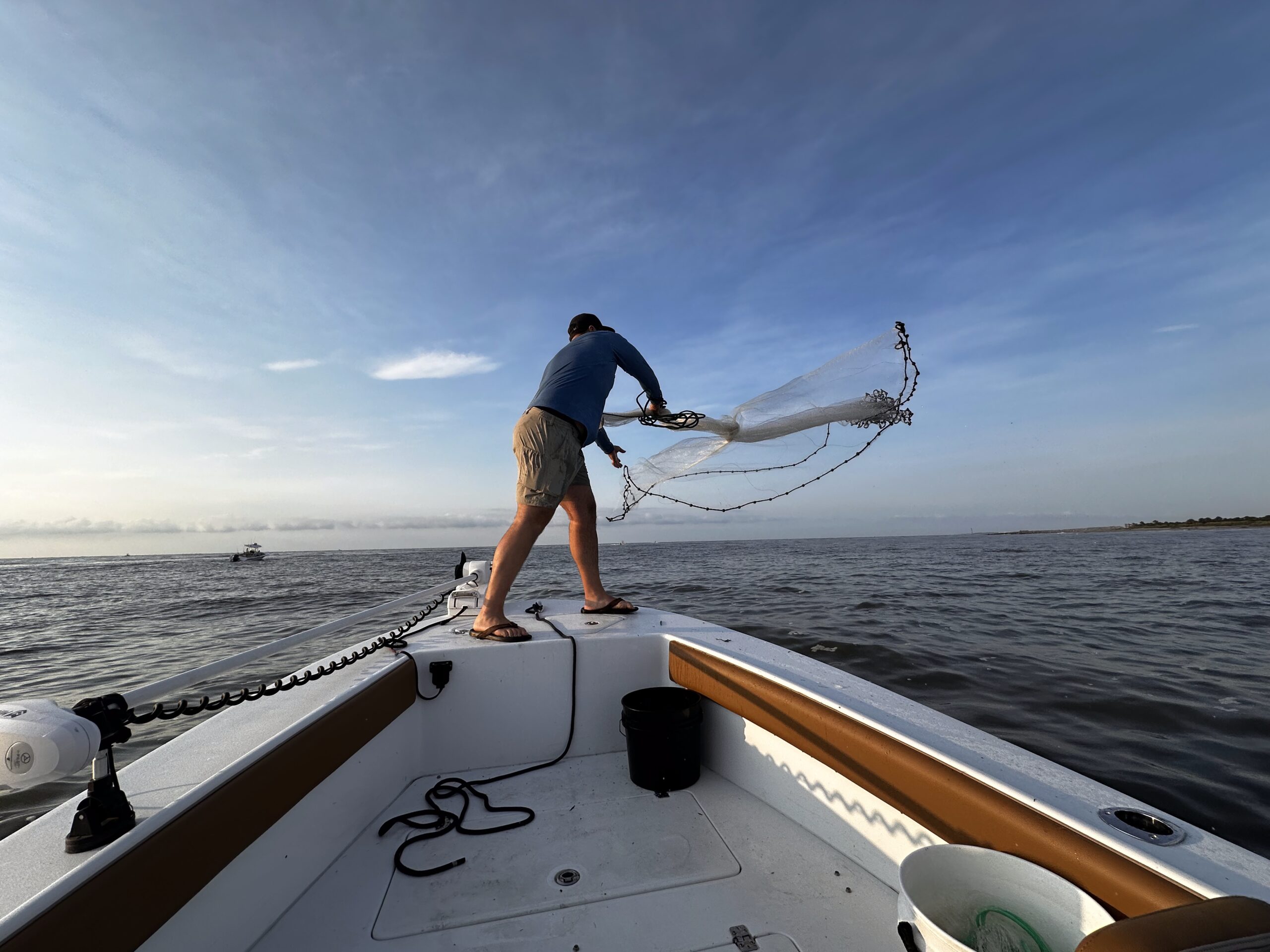
The biggest mistake new cast netters make is trying to muscle a big net with their arms. A proper throw uses your whole body — load the net over your shoulder, hold the handline in your non-dominant hand, bite the net at the right point, and rotate your hips as you release. YouTube has excellent tutorials from Florida guides showing the proper technique for 8–10 foot nets. Practice in your backyard with a hula hoop for a target.
Rinsing & Storing Your Saltwater Cast Net
After every saltwater outing, rinse your cast net thoroughly with fresh water — including the weights, swivel, and all braille lines. Salt crystallizes in mesh fibers and leads to premature degradation. Let the net dry completely before storing it in a mesh bag in a shaded, well-ventilated space. Never store a wet net in a sealed bucket — mildew will destroy mono mesh within weeks.
Untangling Your Cast Net
Tangles are inevitable. Always lay the net out flat on a dock or clean surface and work tangles out from the horn (top) down to the weights. Rushing the process or yanking leads to broken braille lines. Keeping a long wooden dowel or PVC pipe aboard helps you quickly spread and inspect the net between throws.
❓ Frequently Asked Questions
Ready to Stock Your Livewell?
Shop Our Top-Rated Saltwater Cast Nets
Compare prices across the best fishing retailers
Prices and availability subject to change. Last updated May 2025. All affiliate links are clearly disclosed above.