Whether you’re stalking redfish in the shallows, drifting for snook along mangrove edges, or working offshore structure, a quality saltwater trolling motor can completely transform your fishing experience. But with so many options on the market — from budget bow-mounts to GPS-enabled spot-lock systems — knowing what to buy can feel overwhelming. This guide breaks it all down so you can make a confident, informed decision.
What Is a Saltwater Trolling Motor?
A saltwater trolling motor is an electric auxiliary motor designed to quietly and precisely maneuver a boat in marine environments. Unlike gas outboards, trolling motors run on battery power and produce almost zero noise — a massive advantage when you’re trying not to spook fish in clear, shallow saltwater flats or near-structure inshore zones.
Not all trolling motors are created equal. Freshwater motors lack the corrosion-resistant components needed to withstand salt, humidity, and marine growth. A proper saltwater-rated motor uses sealed, anodized, and stainless-steel components throughout — and that distinction matters enormously for longevity.
“Using a freshwater trolling motor in saltwater is one of the most common — and expensive — mistakes new saltwater anglers make. The corrosion sets in fast.”
Saltwater Trolling Motor Use Cases
Understanding how you fish will help you choose the right motor. Saltwater anglers use trolling motors across a wide range of applications:
🎣 Inshore Flats Fishing
Redfish, speckled trout, flounder, and snook anglers working shallow grass flats need silent, precise positioning. A bow-mount trolling motor with GPS spot-lock is a game-changer here — you can hold position over a productive point while both hands stay on the rod.
🦀 Bay & Estuary Fishing
Navigating tidal creeks, oyster beds, and estuaries requires a motor that handles current well. Higher-thrust motors (80–112 lbs) give you the power to punch through tidal flow without burning out your battery.
🐟 Nearshore & Offshore Structure
Working nearshore reefs, jetties, or offshore wrecks? A transom-mount trolling motor is often preferred here for easier installation on center consoles and bay boats, letting you slow-troll live bait with pinpoint control.
🏄 Kayak & Small Skiff Fishing
Lightweight, compact trolling motors (30–55 lbs thrust) have made kayak fishing in saltwater far more accessible. Bow-mounted or transom-mounted units designed for small craft let anglers cover more water with less effort.
🦈 Cobia, King Mackerel & Trolling Applications
Slow-trolling live bait for pelagics like cobia or king mackerel requires a steady, consistent speed. Trolling motors offer far more precise speed control than a gas engine at idle — often making the difference between a bite and a miss.
Key Features to Look For in a Saltwater Trolling Motor
Here are the most important features to evaluate when shopping for the best saltwater trolling motor for your setup:
✅ Saltwater-Rated Construction
Look for anodized aluminum shafts, stainless steel hardware, and sealed motor heads. Minn Kota’s “Corrosion-X” treatment and Motorguide’s “Digital Power Management” on saltwater-specific models are examples of purpose-built marine protection.
✅ GPS Anchor / Spot-Lock Technology
This is arguably the single most valuable feature in modern trolling motors. GPS spot-lock uses satellite positioning to automatically hold your boat in place, even in wind and current. Minn Kota calls theirs “Spot-Lock,” while Motorguide uses “Pinpoint GPS.”
✅ Wireless & App Control
Foot pedals are standard, but wireless remote and smartphone app control (via Bluetooth or Wi-Fi) allow you to position the boat from anywhere onboard — great for solo anglers and tournament fishing.
✅ Variable Speed & Auto Pilot
Proportional speed control (not just 5-speed click stops) gives you nuanced control for slow-trolling. Auto-pilot or heading-lock features allow hands-free straight-line movement — perfect for covering flats efficiently.
✅ Shaft Length
Getting shaft length right is critical. A shaft that’s too short will cavitate (lose thrust by pulling air); too long and it drags unnecessarily. The general rule: add 20 inches to the distance from the waterline to your bow to find your minimum shaft length.
| Bow Height Above Water | Recommended Shaft Length |
|---|---|
| 0–10 inches | 36 inches |
| 10–16 inches | 42 inches |
| 16–22 inches | 48 inches |
| 22–28 inches | 54 inches |
| 28+ inches | 60–72 inches |
How Much Thrust Do You Need?
Thrust is measured in pounds (lbs) and determines how much pushing or pulling power the motor produces. The general guideline is 2 lbs of thrust per 100 lbs of boat weight (fully loaded). In saltwater, where you’re often fighting tides and wind, bump that estimate up by 20–25%.
| Boat Weight (Fully Loaded) | Recommended Thrust | Voltage | Ideal Use |
|---|---|---|---|
| Up to 1,500 lbs | 30–55 lbs | 12V | Kayaks, skiffs, small jons |
| 1,500–2,500 lbs | 55–80 lbs | 12V / 24V | Bay boats, flats boats |
| 2,500–3,500 lbs | 80–101 lbs | 24V | Center consoles, larger bay boats |
| 3,500+ lbs | 112+ lbs | 36V | Large offshore boats, heavy rigs |
Pro tip: In saltwater, always buy one thrust class above what the math says. Tidal current, wind, and wave action add real-world load that the formula doesn’t fully account for.
Battery Options for Saltwater Trolling Motors
Your trolling motor is only as good as the battery powering it. Choosing the right battery — and the right number of batteries — is one of the most important decisions you’ll make. Here’s a breakdown of your options:
🔋 Lead-Acid (Flooded) Batteries
The traditional choice. These are the most affordable upfront but require regular maintenance (checking fluid levels), are heavy, and typically last 2–4 seasons with proper care. Brands like Deka, Interstate, and Bass Pro’s own line are popular choices.
🔋 AGM (Absorbed Glass Mat) Batteries
A step up from flooded lead-acid, AGM batteries are sealed, spill-proof, and maintenance-free. They handle vibration better (important on saltwater), charge faster, and last longer. Expect to pay 2–3x more than flooded batteries, but the tradeoff is worth it for most saltwater anglers.
🔋 Lithium Iron Phosphate (LiFePO4) Batteries
This is where the technology is headed. Lithium trolling motor batteries weigh 50–70% less than lead-acid equivalents, deliver consistent voltage throughout the discharge cycle (so your GPS features don’t drop out), and last 8–10+ years. Brands like Dakota Lithium, Dakota, and Minn Kota’s Quest lithium lineup are top choices. The upfront cost is significant, but the long-term value is hard to argue with for serious saltwater anglers.
| Battery Type | Avg. Cost | Weight (100Ah) | Lifespan | Maintenance | Best For |
|---|---|---|---|---|---|
| Flooded Lead-Acid | $80–$150 | ~60 lbs | 2–4 years | Required | Budget-conscious anglers |
| AGM | $200–$350 | ~55 lbs | 4–6 years | None | Most saltwater anglers |
| Lithium (LiFePO4) | $600–$1,200 | ~25 lbs | 8–10+ years | None | Serious/tournament anglers |
How many batteries do you need? That depends on your motor’s voltage:
- 12V motors: 1 deep-cycle battery
- 24V motors: 2 batteries wired in series
- 36V motors: 3 batteries wired in series
Top Saltwater Trolling Motor Comparison (2026)
Here’s how the leading saltwater trolling motors stack up across the features that matter most:
| Motor | Thrust | Voltage | GPS Anchor | Wireless | Saltwater Rated | Best For |
|---|---|---|---|---|---|---|
| Minn Kota Ultrex Quest | 80–112 lbs | 24V / 36V | ✅ Spot-Lock | ✅ Bluetooth | ✅ | Serious inshore anglers |
| Motorguide Xi5 Saltwater | 55–105 lbs | 12V / 24V | ✅ Pinpoint GPS | ✅ Wireless | ✅ | Bay boats, flats skiffs |
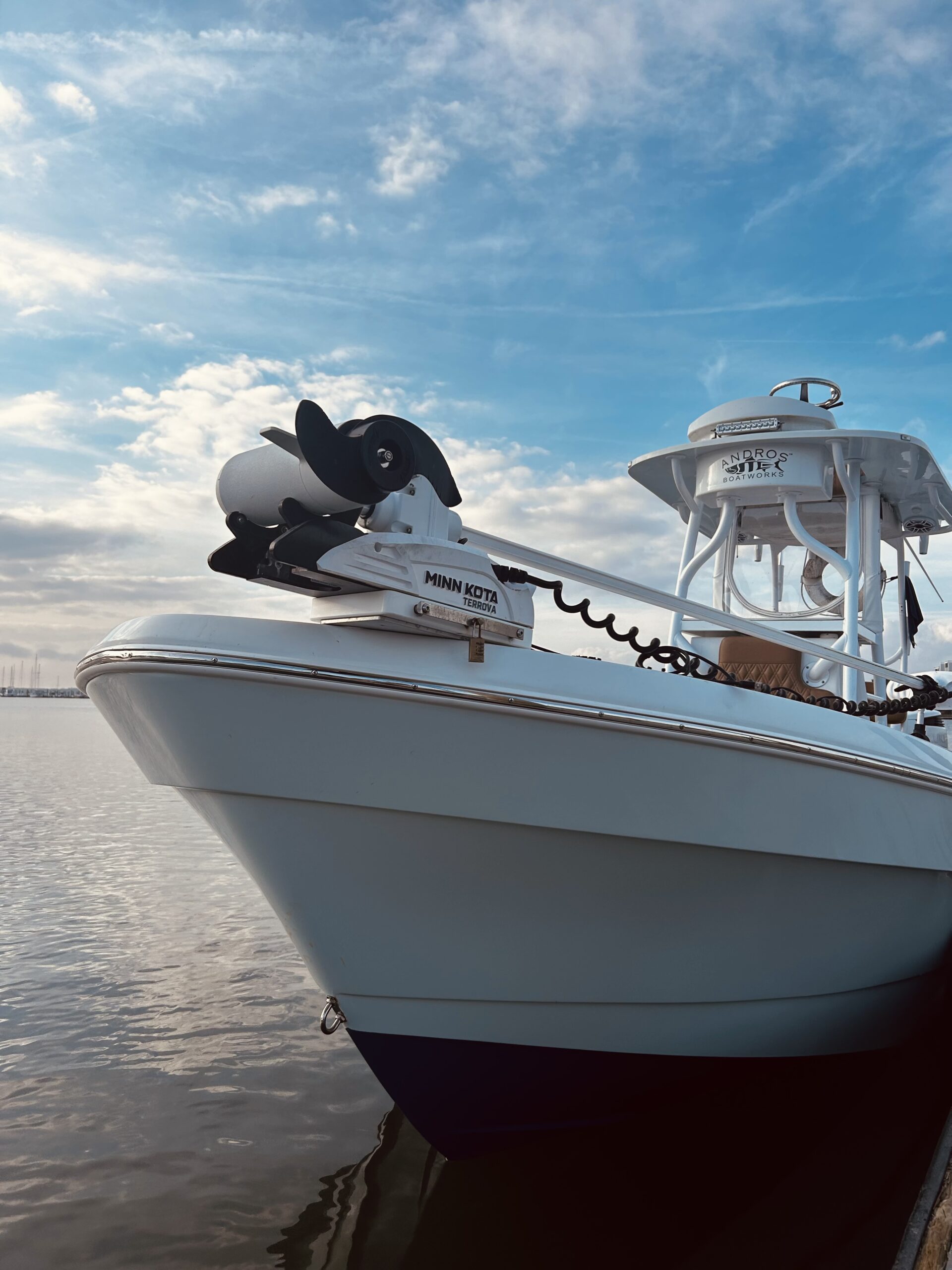
| Minn Kota Terrova SW | 80–112 lbs | 24V / 36V | ✅ Spot-Lock | ✅ i-Pilot | ✅ | All-around inshore/nearshore |
| Newport Vessels NV-Series | 36–86 lbs | 12V / 24V | ❌ | ❌ | ✅ | Budget buyers, kayaks |
| Minn Kota Edge SW | 55–70 lbs | 12V | ❌ | ❌ | ✅ | Entry-level saltwater |
| Motorguide Tour Pro SW | 105–115 lbs | 24V / 36V | ✅ Pinpoint GPS | ✅ Wireless | ✅ | Larger boats, heavy use |
Best Brands for Saltwater Trolling Motors
Minn Kota
The most recognized name in trolling motors, and for good reason. Minn Kota’s i-Pilot and i-Pilot Link systems with Spot-Lock GPS are best-in-class for precision anchoring. Their saltwater-specific lineup (Terrova SW, Ultrex Quest) uses Corrosion-X protection and stainless hardware throughout. If budget isn’t the primary concern, Minn Kota is the gold standard.
Motorguide
Owned by the same parent company (Johnson Outdoors), Motorguide competes closely with Minn Kota and tends to offer slightly more competitive pricing. Their Xi5 and Tour Pro Saltwater series with Pinpoint GPS are strong performers, particularly for anglers who prefer wireless-first control.
Newport Vessels
The go-to for budget saltwater trolling motors. Newport Vessels doesn’t offer GPS anchoring or wireless remotes at the entry level, but their motors are saltwater-rated, reliable, and backed by solid warranty support. Great for kayak anglers or those just getting started in saltwater fishing.
Haswing
An emerging brand popular with kayak and small skiff anglers. Haswing offers lightweight, compact motors with decent corrosion resistance at very accessible prices — a viable alternative for anglers who fish occasionally in saltwater.
Saltwater Trolling Motor Maintenance: Keep It Running Season After Season
Salt is brutally corrosive. The difference between a trolling motor that lasts 10 years and one that fails in two often comes down to post-trip maintenance habits. Here’s what you should do:
- 🚿 Rinse with fresh water after every trip. This is non-negotiable. Focus on the motor head, prop, shaft, and any metal hardware.
- 🔧 Inspect and replace the prop anode (sacrificial zinc) at least once per season. This protects the motor from galvanic corrosion.
- 🧴 Apply dielectric grease to all electrical connections to block moisture intrusion.
- 🛡️ Spray the shaft and motor head with corrosion inhibitor (like Corrosion-X or Boeshield T-9) monthly during the fishing season.
- 🔩 Check all bolts and mounting hardware for rust or looseness before each trip — saltwater vibration works connections loose over time.
- 🔋 Store batteries properly during the off-season — keep them charged (never fully depleted) and in a cool, dry location.
Frequently Asked Questions About Saltwater Trolling Motors
Can I use a freshwater trolling motor in saltwater?
Technically yes — but you shouldn’t. Freshwater motors will corrode rapidly when exposed to saltwater and are not covered under warranty for saltwater use. Always use a motor specifically rated for saltwater environments.
How long will my trolling motor battery last on a full charge?
Runtime depends on battery capacity (amp-hours), motor thrust, and the speed you’re running. A 100Ah battery on a 24V/80 lb motor running at moderate speed will typically last 6–10 hours. Running at full power cuts that dramatically. A battery monitor is a worthwhile investment for any saltwater angler.
Bow-mount vs. transom-mount: which is better for saltwater?
Bow-mount motors pull the boat from the front and offer much better control and maneuvering, especially with GPS features. They’re the preferred choice for most inshore anglers. Transom-mount motors are simpler, more affordable, and work well on smaller boats or as a secondary motor for slow-trolling purposes.
Do I need a special charger for my trolling motor batteries?
Yes. Always use a multi-bank marine charger matched to your battery type (lead-acid vs. lithium). Using the wrong charger can damage batteries and, in the case of lithium batteries, is often a warranty requirement. Brands like Minn Kota, NOCO, and Mepps make excellent marine chargers.
What’s the best saltwater trolling motor for a flats boat?
For most flats boats in the 18–22-foot range, the Minn Kota Terrova SW or Ultrex Quest in 80–112 lb thrust (24V) is the top recommendation. The Spot-Lock GPS is invaluable for positioning on shallow flats, and the saltwater-rated components handle the marine environment reliably.
Ready to Upgrade Your Setup?
Compare prices across the top retailers and find the best deal on your next saltwater trolling motor.
Disclosure: This article contains affiliate links. If you purchase through these links, we may earn a small commission at no additional cost to you. This helps support the site and allows us to continue producing free fishing content. We only recommend products we’d genuinely use ourselves.