Author: reelgearguide

  • Best Daiwa Saltwater Spinning Reels for Inshore Fishing (2026 Review)

    Affiliate Disclosure: This article contains affiliate links. If you purchase a product through one of these links, we may earn a small commission at no extra cost to you. We only recommend gear we genuinely believe in. Thank you for supporting the site!

    By The Inshore Fishing Team  |  Updated May 2026  |  ⏱ 9-minute read

    Daiwa Reels Built for the Salt

    Redfish, speckled trout, flounder, snook — find the right Daiwa spinning reel for every inshore target and budget.

    When it comes to saltwater inshore fishing reels, few brands carry the pedigree of Daiwa. For over six decades, Daiwa has engineered spinning reels that balance cutting-edge technology with real-world fishability. Whether you’re sight-casting to tailing redfish on a South Carolina flat, working topwater for speckled trout along a grass edge, or battling a hard-running snook around a dock — Daiwa has a reel for the job.

    In this deep-dive review, we break down Daiwa’s best inshore saltwater spinning reels across every price tier — from budget-friendly entry-level options to tournament-grade performers. We’ll cover the key specs anglers actually care about: drag performance, corrosion resistance, retrieve smoothness, and overall value. Let’s get into it.

    🏆 Best Overall
    Daiwa BG MQ
    Monocoque body · 25 lb drag
    💰 Best Value
    Daiwa BG
    Workhorse of the inshore world
    ⚡ Premium Pick
    Daiwa Saltiga
    Top-tier for serious anglers
    🎣 Best Lightweight
    Daiwa Legalis LT
    Ultra-light finesse inshore

    Why Choose Daiwa for Inshore Saltwater Fishing?

    Inshore fishing puts unique demands on spinning reels. You need equipment that can handle salt, sand, and hard-fighting fish without corroding after a season of use. Daiwa addresses this with proprietary technologies including ATD (Automatic Tournament Drag) — a silky-smooth drag system that applies consistent pressure without sudden spikes — and Magsealed construction that uses a magnetic oil barrier to keep saltwater out of bearings and line roller assemblies. Compared to standard sealing methods, Magsealed has proven itself through years of abuse in the salt.

    Their newer LT (Light & Tough) platform and Monocoque body design deliver reel bodies that are both lighter and more rigid than traditional designs — a meaningful advantage when you’re making hundreds of casts a day targeting inshore species.

    🐟 Pro Tip: Reel Size for Inshore Fishing
    For most inshore applications — redfish, trout, flounder, snook, stripers — a 3000–4000 size reel is the sweet spot. Light finesse work (speckled trout, flounder) calls for a 2500. Larger slot redfish and snook may warrant a 4000–5000.

    Daiwa Inshore Spinning Reel Reviews

    1. Daiwa BG MQ Spinning Reel
    🏆 Best Overall Inshore Spinning Reel

    The Daiwa BG MQ is the evolution of what many anglers consider the best value saltwater spinning reel ever made. The MQ (Monocoque) upgrade replaces the traditional side-plate-and-body design with a single-unit aluminum housing — the result is a dramatically stiffer frame that eliminates gear flex under heavy loads. This matters enormously when a large redfish or snook makes that first powerful run.

    Paired with Daiwa’s ATD drag system (rated up to 22–25 lbs depending on size) and a waterproof drag, the BG MQ handles saltwater abuse exceptionally well. The machined aluminum housing resists corrosion, and the reel’s overall fit and finish punch well above its price class. For inshore anglers who want a near-premium reel without the premium price tag, the BG MQ is the clear recommendation.

    • Sizes available: 2500, 3000, 4000, 5000, 6000, 8000
    • Bearings: 6+1 stainless steel CRBB
    • Max drag: 18–33 lbs (size dependent)
    • Body material: Monocoque aluminum
    • Best for: Redfish, snook, speckled trout, flounder
    ✔ Pros

    • Incredibly rigid Monocoque body
    • Smooth ATD drag
    • Excellent corrosion resistance
    • Outstanding price-to-performance ratio
    ✘ Cons

    • Slightly heavier than LT platform reels
    • No Magsealed bearing protection

    2. Daiwa BG Spinning Reel
    💰 Best Budget Inshore Saltwater Reel

    The original Daiwa BG has been the workhorse of inshore anglers for years — and for good reason. It offers a rock-solid aluminum body, smooth-for-the-price drag, and proven durability in saltwater for well under $100. If you’re buying your first dedicated inshore reel or gearing up multiple rods without breaking the bank, the BG remains one of the smartest buys in fishing.

    While it lacks the rigidity of the Monocoque body design and doesn’t include Magsealed technology, the BG’s proven track record in the salt speaks for itself. Thousands of inshore anglers have put serious miles on these reels chasing speckled trout, redfish, and flounder with zero complaints about reliability.

    • Sizes available: 2500, 3000, 4000, 5000
    • Bearings: 5+1 stainless steel CRBB
    • Max drag: 17–26 lbs (size dependent)
    • Body material: Machined aluminum
    • Best for: Budget-conscious inshore anglers, beginner to intermediate
    ✔ Pros

    • Proven saltwater durability
    • Exceptional value under $100
    • Aluminum body
    • Wide size range
    ✘ Cons

    • Older body design vs. BG MQ
    • Drag not as buttery as ATD

    3. Daiwa Legalis LT Spinning Reel
    🎣 Best Lightweight Inshore Option

    Built on Daiwa’s Light & Tough (LT) platform, the Legalis LT brings serious weight savings to the inshore game. At just 7.4–8.1 oz in 3000–4000 sizes, it’s noticeably lighter on the rod — something you’ll appreciate after a full day of casting. The LT body uses advanced engineering-grade polymer reinforced with aluminum components to keep weight down while maintaining structural integrity.

    The Legalis LT is an outstanding choice for finesse inshore fishing — light jig heads under a popping cork for speckled trout, small soft plastics for flounder, or live shrimp on a Carolina rig. It’s not designed for bull redfish on heavy braid, but for lighter applications, it excels.

    • Sizes available: 1000, 2000, 2500, 3000, 4000, 6000
    • Bearings: 5+1
    • Max drag: 12–22 lbs
    • Body material: LT polymer/aluminum composite
    • Best for: Speckled trout, flounder, light inshore finesse
    ✔ Pros

    • Ultralight for all-day casting
    • Smooth, consistent drag
    • Great for finesse presentations
    • Budget-friendly entry to LT platform
    ✘ Cons

    • Not ideal for heavy inshore targets
    • Polymer body less rigid than aluminum

    4. Daiwa Ballistic LT Spinning Reel
    ⚙️ Mid-Range Performance for Serious Inshore Anglers

    The Daiwa Ballistic LT sits comfortably in the mid-range price tier and delivers a meaningful step up in performance. With 9+1 bearings, Daiwa’s smooth-operating ATD drag, and the LT platform’s weight advantage, the Ballistic LT punches well above its price class. The air rotor design reduces inertia at the tip for noticeably faster hooksets and improved sensitivity.

    For anglers who fish inshore frequently and want a reel that will grow with their skills — particularly those targeting larger slot redfish, jack crevalle, or live-bait snook fishing — the Ballistic LT is a compelling option between entry-level and premium.

    • Sizes available: 1000, 2000, 2500, 3000, 4000, 6000
    • Bearings: 9+1 CRBB
    • Max drag: 13–22 lbs
    • Body material: Zaion LT body, aluminum side plate
    • Best for: Versatile inshore — redfish, trout, snook
    ✔ Pros

    • 9+1 CRBB for ultra-smooth retrieves
    • ATD drag system
    • Light yet strong LT body
    • Air rotor for reduced inertia
    ✘ Cons

    • Mid-range price may stretch budgets
    • Not Magsealed

    5. Daiwa Saltiga Spinning Reel
    ⚡ Premium Pick — Built for the Most Demanding Inshore Situations

    The Daiwa Saltiga is Daiwa’s flagship saltwater spinning reel — and it shows in every detail. Full Magsealed construction protects every bearing from corrosion, the Monocoque HD body is milled from aerospace-grade aluminum, and the drag system delivers ferociously smooth power. This is the reel you buy when you refuse to compromise.

    While often associated with offshore fishing, smaller Saltiga sizes (4000–5000) make phenomenal inshore reels for anglers who demand the best for trophy snook, large tarpon in passes, or bull redfish. The Saltiga will outlast cheaper alternatives by years with proper care.

    • Sizes available: 4000, 5000, 6000, 8000, 10000, 14000, 20000
    • Bearings: 12+1 Magsealed CRBB
    • Max drag: 25–55 lbs (size dependent)
    • Body material: Monocoque HD Aluminum
    • Best for: Snook, large redfish, light tarpon, serious inshore anglers
    ✔ Pros

    • Full Magsealed corrosion protection
    • Flagship drag and gear system
    • Extreme build quality and longevity
    • Handles anything inshore throws at it
    ✘ Cons

    • Premium price point
    • Overkill for casual inshore fishing

    Daiwa Inshore Spinning Reel Comparison Chart

    Reel Price Range Body Bearings Max Drag Magsealed ATD Drag Best For Rating
    BG MQ Top Pick $$ Monocoque Alum. 6+1 CRBB 18–33 lb No Yes All-around inshore ★★★★★
    BG Classic $ Machined Alum. 5+1 CRBB 17–26 lb No No Budget inshore ★★★★½
    Legalis LT $ LT Composite 5+1 12–22 lb No No Finesse / light inshore ★★★★
    Ballistic LT $$ Zaion / Alum. 9+1 CRBB 13–22 lb No Yes Versatile inshore ★★★★★
    Saltiga Premium $$$$ Monocoque HD Alum. 12+1 CRBB 25–55 lb Yes ✅ Yes Trophy inshore / snook ★★★★★

    $ = under $80  |  $$ = $80–$200  |  $$$$ = $400+. Prices vary by retailer and size. Check current prices via the buttons above.

    Which Daiwa Inshore Reel Is Right for You?

    For the Budget-Conscious Angler

    Start with the Daiwa BG or Legalis LT. Both offer dependable saltwater performance without emptying your wallet. The BG’s aluminum body is more durable for heavier fish; the Legalis LT wins if weight and sensitivity matter more.

    For the Regular Inshore Angler

    The Daiwa BG MQ is the clear choice. The Monocoque body, ATD drag, and improved overall rigidity make it a reel you’ll use confidently for years. It represents the best intersection of price, performance, and durability in Daiwa’s lineup.

    For the Obsessed Inshore Enthusiast

    Step up to the Daiwa Ballistic LT or Saltiga. If you’re chasing trophy snook around structure, running live bait for large redfish, or simply want the finest saltwater spinning reel money can buy, the Saltiga will never let you down. It’s an investment, not just a purchase.

    🔧 Maintenance Tip for All Saltwater Reels
    Regardless of which Daiwa reel you choose, always rinse it with fresh water after every saltwater outing. A 30-second rinse over a sink — not a pressurized hose — dramatically extends reel life and keeps the drag system performing like new.

    Final Verdict: Daiwa Dominates the Inshore Spinning Reel Market

    Daiwa has earned its reputation as one of the top inshore saltwater spinning reel brands through decades of innovation and refinement. From the workhorse BG at the entry level to the Saltiga at the pinnacle of performance, there’s a Daiwa reel perfectly matched to every inshore angler’s style and budget.

    Our top recommendation remains the Daiwa BG MQ for most anglers — it’s simply the best combination of technology, toughness, and value in the inshore spinning reel category today. But whatever your budget, Daiwa has a reel that will hold up to the salt and help you put more fish in the net.

    Tight lines, and good fishing!

    Ready to Upgrade Your Inshore Setup?

    Shop Daiwa’s full saltwater spinning reel lineup at your favorite tackle retailers:
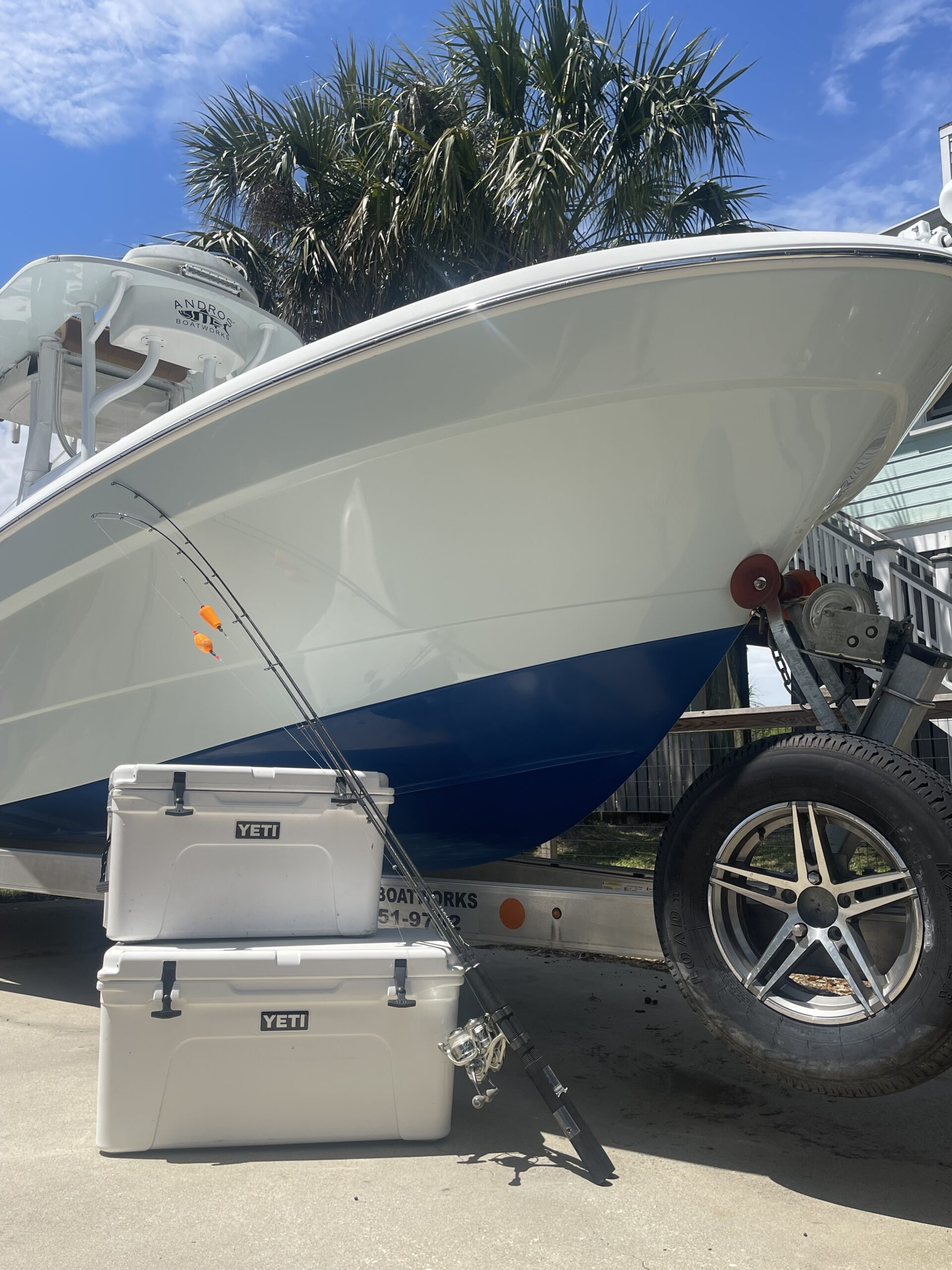
  • The Complete YETI Cooler Guide: Every Model Compared

    The Complete YETI Cooler Guide: Every Model Compared

    ⭐ Ultimate Buyer’s Guide 2026From weekend tailgates to month-long offshore expeditions — find the perfect YETI cooler for your adventure with our in-depth breakdown of every series, size, and use case.

    Updated:  |  12 min read  |  By Outdoor Gear Experts

    📢 Affiliate Disclosure: This article contains affiliate links to Amazon, West Marine, and Bass Pro Shops. If you purchase through our links, we may earn a small commission at no extra cost to you. We only recommend products we genuinely believe in. Thank you for supporting our site!

    If you’ve ever searched for the best YETI cooler online, you already know the problem: YETI makes a lot of coolers, and the differences between them aren’t always obvious. Hard-sided or soft? Tundra or Roadie? Hopper or Daytrip? The choices are genuinely overwhelming — but the right cooler can be a game-changer for camping trips, fishing charters, boating weekends, tailgates, and everything in between.

    This guide breaks down every major YETI cooler series, compares them side-by-side, and matches each model to the real-world situations where it excels. Whether you’re a weekend warrior or a serious offshore angler, we’ll help you find your perfect match — and tell you exactly where to buy it at the best price.

    Why YETI? What Makes Them Worth the Price?

    YETI coolers aren’t cheap — and that’s not an accident. The brand built its reputation among serious outdoorsmen by engineering coolers that actually hold ice for days, survive brutal abuse, and resist bear attacks (literally — many YETI coolers are IGBC bear-resistant certified). Here’s what sets them apart from budget brands:

    • PermaFrost™ Insulation: Up to 3 inches of pressure-injected polyurethane foam surrounds the cooler’s interior, delivering exceptional ice retention.
    • FatWall™ Design: Extra-thick walls maximize cold-holding performance without sacrificing interior volume.
    • ColdLock™ Gasket: A freezer-quality seal keeps cold air in and warm air out.
    • NeverFlat™ Wheels (select models): Rugged, easy-rolling wheels built for uneven terrain.
    • T-Rex™ Lid Latches: Military-grade rubber latches that create an airtight seal.

    The bottom line: a quality YETI cooler can keep ice frozen for 5–7 days (or more in ideal conditions). That’s not marketing hype — it’s the reason professional guides, offshore anglers, and backcountry hunters swear by them.


    YETI Hard-Sided Coolers: The Full Lineup

    YETI’s hard-sided lineup is the backbone of their product range. These are the rotomolded beasts built for maximum ice retention, heavy-duty durability, and extended trips where performance is non-negotiable.

    🧊

    Most Popular

    YETI Tundra Series

    The original YETI. The Tundra is the benchmark hard-sided rotomolded cooler — available in 15+ sizes from 35 to 350 quarts. Virtually indestructible and built for extreme ice retention.

    🚗

    Best for Car Camping

    YETI Roadie Series

    Compact, portable hard-sided coolers in 15, 24, 32, and 48-quart sizes. The Roadie 24 has an integrated carry handle and fits in tight spots — ideal for day trips, tailgates, and grab-and-go adventures.

    🎡

    Best for Large Groups

    YETI Tundra Haul

    YETI’s only wheeled hard-sided cooler. The Tundra Haul rolls over sand, gravel, and grass with ease — a 45-quart-capacity beast you don’t have to carry. Perfect for beach days and campsite setups.

    🏕️

    Premium Pick

    YETI V Series

    YETI’s top-of-the-line vacuum-insulated hard cooler. The stainless steel construction and vacuum insulation take ice retention to the next level — but comes at a premium price for those who demand the absolute best.

    YETI Tundra Series: In-Depth

    The YETI Tundra is the gold standard of rotomolded coolers and the model that put YETI on the map. It’s available in a jaw-dropping range of sizes, making it the go-to choice for everything from solo weekend trips to large group expeditions.

    ✅ Best For: Extended camping trips, hunting camps, fishing tournaments, tailgating, overlanding, and anyone who needs maximum ice retention for 3–7 days.
    ✅ Pros

    • Legendary ice retention (5–7 days)
    • IGBC bear-resistant (most sizes)
    • Massive size range (35–350 qt)
    • Virtually indestructible rotomold construction
    • Dry goods basket included
    • Wide range of accessories available
    ❌ Cons

    • Heavy even when empty
    • No wheels (except Tundra Haul)
    • Premium price tag
    • Large sizes require two people to carry

    Popular Tundra sizes: The Tundra 45 is the best-seller — big enough for a weekend trip for two, small enough to carry solo. The Tundra 65 is the most versatile for groups of 3–4. The Tundra 110 and 160 are staples at hunting camps and fishing lodges.

    YETI Roadie Series: In-Depth

    The YETI Roadie is YETI’s answer for those who want hard-sided durability in a compact, grab-and-go format. The redesigned Roadie 24 and Roadie 48 sport a vertical opening lid — meaning the cooler opens like a backpack, so you don’t need to reach all the way to the bottom.

    ✅ Best For: Day trips, tailgating, golf outings, picnics, beach days, and as a personal cooler on longer trips.
    ✅ Pros

    • Compact and highly portable
    • Vertical lid on newer models for easy access
    • Same ice retention as Tundra
    • Perfect size for 1–2 people
    • Carry handle folds flat
    ❌ Cons

    • Limited capacity vs. Tundra
    • Not ideal for groups larger than 2
    • Roadie 15 is very small for the price

    YETI Tundra Haul: In-Depth

    The YETI Tundra Haul is YETI’s only wheeled hard-sided cooler, and it’s a beach and campsite game-changer. With NeverFlat™ wheels and a telescoping handle, it rolls over any terrain you’d encounter — sand, gravel, grass, boat decks. At roughly 45-quart capacity, it’s large enough for a group but rolls instead of carrying.

    ✅ Best For: Beach trips, campsite use, tailgates, boat days, and any situation where you need volume but don’t want to carry a heavy cooler.
    ✅ Pros

    • Rolls over rough terrain effortlessly
    • Full rotomolded YETI durability
    • Good capacity for groups
    • Telescoping handle locks securely
    ❌ Cons

    • Wheels add weight and bulk
    • Not as compact as Roadie
    • Only one wheeled option in lineup


    YETI Soft-Sided Coolers: The Full Lineup

    YETI’s soft-sided coolers punch well above their weight class in terms of ice retention while offering portability and flexibility that hard-sided models simply can’t match. They’re the top choice for hikers, kayakers, boaters, and anyone who needs to carry their cooler on their back or stash it in a tight space.

    🎒

    Fan Favorite

    YETI Hopper Series

    Portable soft-sided coolers in backpack (Hopper BackFlip, M30), flip-top (Hopper Two), and tote styles. DryHide™ shell resists punctures and is waterproof. Multiple sizes from 8 to 30+ quarts.

    ☀️

    Day Tripper

    YETI Daytrip Series

    Ultra-lightweight and compact soft coolers for short outings. The Daytrip Lunch Box and Daytrip Tote are YETI’s most affordable soft options — great for work lunches and half-day adventures.

    🧺

    Best for Boating

    YETI Camino Carryall

    A versatile tote bag that doubles as a soft cooler. Water-resistant and available in multiple sizes — the Camino 20 and Camino 35 are popular choices for beach days and boat trips where style meets function.

    🥤

    Compact

    YETI Hopper Flip 8 & 12

    YETI’s smallest soft coolers — perfect for personal use. The Hopper Flip 8 fits a six-pack plus ice. Magnetic HydroLok™ zipper creates a leakproof seal. Clip it to your pack and go.

    YETI Hopper Series: In-Depth

    The YETI Hopper line is YETI’s most versatile soft cooler collection. The flagship Hopper M30 is arguably the best all-around soft cooler on the market — at 30 quarts, it holds up to 20 cans with ice, features a magnetic HydroLok™ zipper, and stays cold for up to 24 hours in warm conditions. The Hopper BackFlip 24 adds backpack straps for hands-free portability.

    ✅ Best For: Day hikes, kayaking, fishing from a kayak or small boat, beach trips, concerts, tailgating, and anyone who needs a portable soft cooler for 1–2 days.
    ✅ Pros

    • Excellent ice retention for a soft cooler
    • DryHide™ shell is puncture-resistant & waterproof
    • HydroLok™ zipper is fully leakproof
    • Can be packed against your body (fish, game)
    • Multiple carry options
    • Backpack version is very popular for hikers
    ❌ Cons

    • Not bear-resistant
    • Pricier than most competitor soft coolers
    • HydroLok zipper requires care to maintain seal
    • Ice retention shorter than hard-sided models

    YETI Daytrip Series: In-Depth

    The YETI Daytrip lineup offers YETI quality at a more accessible price point. The Daytrip Lunch Box is a serious insulated lunch bag that laughs at cheap alternatives — ColdCell™ insulation keeps food cold well beyond a standard workday. The Daytrip Tote holds more and doubles as a grocery bag insulator.

    ✅ Best For: Work lunches, half-day hikes, picnics, kids’ sports games, grocery runs, and light beach days where you’re not going all day.


    YETI Cooler Comparison Table: All Models at a Glance

    Use the table below to quickly compare every major YETI cooler series by the specs that matter most for your adventures.

    Model Type Sizes Available Ice Retention Bear Cert. Wheels Best For Price Range Rating
    Tundra 35 Hard / Rotomold 35 qt 3–5 days Solo / couples camping $300–$350 ★★★★★
    Tundra 45 Hard / Rotomold 45 qt 5–7 days Weekend trips, fishing $325–$375 ★★★★★
    Tundra 65 Hard / Rotomold 65 qt 5–7 days Groups, extended trips $375–$425 ★★★★★
    Tundra 110 Hard / Rotomold 110 qt 7+ days Hunting camps, lodges $500–$550 ★★★★★
    Tundra Haul Hard / Wheeled ~45 qt 5–7 days Beach, campsite, events $400–$450 ★★★★★
    Roadie 15 Hard / Compact 15 qt 3–4 days Day trips, personal use $200–$250 ★★★★☆
    Roadie 24 Hard / Compact 24 qt 3–5 days Tailgate, golf, day trips $250–$300 ★★★★★
    Roadie 48 Hard / Compact 48 qt 5–6 days Couples camping, boating $325–$375 ★★★★★
    V Series 85 Hard / Vacuum 45, 85 qt 7–10+ days Extreme expeditions $700–$800 ★★★★★
    Hopper Flip 8 Soft 8 qt ~24 hrs Personal, kayaking $130–$150 ★★★★☆
    Hopper Flip 18 Soft 18 qt 24–36 hrs Hiking, day trips $200–$230 ★★★★☆
    Hopper M30 Soft 20, 30 qt 24–48 hrs Fishing, tailgate, hikes $275–$325 ★★★★★
    Hopper BackFlip 24 Soft / Backpack 24 qt 24–48 hrs Hiking, kayaking, concerts $300–$350 ★★★★★
    Daytrip Lunch Box Soft / Compact ~5 qt 8–10 hrs Work lunch, short outings $60–$80 ★★★★☆
    Daytrip Tote Soft / Tote ~20 qt 12–16 hrs Beach, groceries, picnics $100–$130 ★★★★☆


    Best YETI Cooler for Every Use Case

    Now the fun part. Let’s match the right YETI cooler to the activities you actually do. These recommendations are based on real-world performance data, user reviews, and feedback from professional guides, anglers, and outdoor enthusiasts.

    Offshore & Deep-Sea Fishing

    You need a cooler that survives saltwater, keeps fish iced for an entire day trip, and can take abuse on a rocking boat deck.

    👉 Best Pick: Tundra 65 or Tundra 110 — also available at West Marine, the go-to source for marine-grade gear.

    🚣

    Kayak Fishing & Kayaking

    Space is at a premium. You need something that fits in the bow or stern hatch, is waterproof, and won’t weigh you down.

    👉 Best Pick: Hopper Flip 18 or Hopper M20 — compact, waterproof, and fits perfectly in a kayak.

    🏕️

    Car Camping & Overlanding

    You’re loading up the truck or SUV and heading into the backcountry. Ice retention matters — you may be a week from civilization.

    👉 Best Pick: Tundra 65 or Tundra 45 depending on group size. Hard-sided, bear resistant, long-haul ready.

    🦌

    Hunting Camp

    Field-dressing game, keeping meat cold for days, surviving ATV trips and rough terrain. You need durable and roomy.

    👉 Best Pick: Tundra 110 or Tundra 160 — used by professional guides nationwide.

    🏈

    Tailgating

    Cold drinks for a crowd, easy-access lid, and something that looks great at the parking lot party.

    👉 Best Pick: Tundra Haul (rolls to the game) or Roadie 48 (fits in the trunk). Both are crowd pleasers.

    🏖️

    Beach Days

    Sand, sun, and salt water. You need something that rolls, doesn’t rust, and keeps drinks cold all day.

    👉 Best Pick: Tundra Haul for groups, Hopper M30 for couples, Daytrip Tote for a solo beach day.

    🥾

    Day Hiking & Backpacking

    Going into the wilderness on foot means every ounce matters. You need hands-free carrying and solid insulation.

    👉 Best Pick: Hopper BackFlip 24 — a proper backpack with YETI-grade insulation built right in.

    Boating & Sailing

    Your cooler needs to deal with constant moisture, sun exposure, and limited deck space.

    👉 Best Pick: Tundra 45 or Roadie 48. West Marine carries YETI specifically for the boating crowd — worth checking.

    💼

    Work Lunch

    You need something that keeps your lunch cold through an 8-hour workday — not a 500-quart rotomolded tank.

    👉 Best Pick: YETI Daytrip Lunch Box — YETI’s most affordable option and genuinely excellent for the office.

    Where to Buy YETI Coolers: Retailer Breakdown

    YETI is sold through several authorized retailers, each with its own advantages depending on your shopping preference and use case:

    🛒 Amazon

    Amazon typically offers the widest selection of YETI models and sizes, competitive pricing, fast Prime shipping, and the ability to read thousands of verified customer reviews before you buy. Great for price comparison and discovering limited colorways.

    ⚓ West Marine

    West Marine is the premier destination for boaters and anglers. Their staff actually uses this gear on the water, and their YETI selection skews toward models best suited for marine environments — Tundra 65, Tundra 110, and Hopper models are staples. West Marine also carries YETI marine accessories.

    🎣 Bass Pro Shops / Cabela’s

    Bass Pro Shops (which also owns Cabela’s) carries the full YETI lineup with a heavy emphasis on hunting and fishing models. In-store, you can often find YETI coolers on display — an excellent way to see sizes in person before buying. Bass Pro also hosts periodic deals and member pricing events.

    ⚡ Pro Tips: Getting the Most From Your YETI

    • Pre-chill your cooler before a trip — fill it with ice or cold water for a few hours first. This dramatically improves ice retention.
    • Use block ice instead of (or in addition to) cube ice. Block ice melts significantly slower.
    • Pack it full. A full YETI stays cold longer than a half-empty one. Fill air gaps with extra ice or frozen water bottles.
    • Keep it in the shade whenever possible. Direct sun is your cooler’s biggest enemy — a shaded cooler will outperform a sun-baked one by 2–3 days.
    • Drain water sparingly. The ice-cold water in your cooler actually helps keep things cold. Drain only when necessary.
    • Register your YETI after purchase. YETI’s warranty is excellent and their customer service is outstanding — registration makes claims easier.


    Frequently Asked Questions About YETI Coolers

    How long do YETI coolers actually keep ice?

    Under ideal conditions — pre-chilled cooler, block ice, kept in shade — YETI hard-sided coolers can retain ice for 5–7 days. The V Series can push 10+ days. Soft-sided Hoppers are rated for 24–48 hours under normal use. Real-world results vary with ambient temperature, how often you open the lid, and packing method.

    Are YETI coolers worth the money?

    For serious outdoor use — extended camping, hunting, fishing, boating — YETI coolers are absolutely worth the investment. They outperform budget alternatives by a significant margin and are built to last a decade or more. If you’re only using a cooler for occasional backyard cookouts, a less expensive option may suffice. But if ice retention and durability are priorities, YETI justifies its price.

    What is the most popular YETI cooler size?

    The YETI Tundra 45 is consistently the best-selling hard-sided YETI cooler. It offers a great balance of capacity (holds about 28 cans plus ice), portability (can be carried solo), and ice retention. Among soft coolers, the Hopper M30 is the most popular model.

    What’s the difference between the Tundra and the V Series?

    The YETI Tundra uses pressure-injected polyurethane foam insulation, which is excellent. The V Series uses vacuum-insulated panels — the same technology used in commercial freezer applications — which delivers superior ice retention (potentially twice as long). The V Series is significantly more expensive and is geared toward extreme users who need the absolute best performance.

    Can I use a YETI cooler on a boat?

    Absolutely — YETI coolers are extremely popular among boaters and anglers. The Tundra series is UV-resistant, saltwater-safe, and built to take the abuse of a marine environment. West Marine stocks YETI specifically for boating customers. Many anglers also use the Hopper M30 for smaller vessels and kayaks.

    Does YETI offer a warranty?

    Yes — YETI offers a 5-year warranty on hard-sided coolers (Tundra, Roadie, Tundra Haul, V Series) and a 3-year warranty on soft-sided coolers (Hopper, Daytrip). Their customer service reputation is excellent. Register your product at YETI.com after purchase to simplify any warranty claims.

    Ready to Find Your YETI?

    Whether you’re heading offshore, hitting the trail, or just want cold drinks at the tailgate — there’s a perfect YETI cooler for every adventure. Shop from trusted retailers below:


  • The Ultimate Guide to Penn Saltwater Spinning Reels 2026

    The Ultimate Guide to Penn Saltwater Spinning Reels 2026

    ⚓ Saltwater Gear Guide 2026

    We break down every top Penn saltwater spinning reel — from budget-friendly to premium — so you can find the right reel for your fishing style and stop second-guessing your gear at the water’s edge.

    📢 Affiliate Disclosure: This article contains affiliate links to Amazon, Bass Pro Shops, and West Marine. If you click a link and make a purchase, we may earn a small commission at no additional cost to you. This helps us keep producing honest, in-depth fishing gear reviews. We only recommend products we genuinely stand behind.

    Quick Summary: Penn has been the gold standard in saltwater spinning reels since 1932. Whether you’re surf fishing for stripers along the Carolina coast, chasing redfish in the flats, or targeting big fish offshore, Penn offers a reel built for it. Our top picks: Penn Battle IV (best value), Penn Slammer IV (best sealed protection), Penn Spinfisher VII (best all-around), and Penn Torque II (best premium).

    If you’ve spent any time fishing in the surf, off a pier, or in open coastal water, you know that saltwater fishing reels face a completely different set of demands than freshwater gear. Salt corrodes. Sand grinds. Hard-running fish put drag systems to the test. That’s exactly why Penn saltwater spinning reels have earned the trust of serious anglers for nearly a century — and why they keep showing up in the hands of the people who refuse to lose a fish because of their equipment.

    This guide covers the best Penn saltwater spinning reels available today, with honest pros, a detailed comparison table, size guidance, and direct links to the lowest prices at Amazon, Bass Pro Shops, and West Marine.

    Why Penn Dominates the Saltwater Spinning Reel Market

    Penn Fishing has been manufacturing saltwater-specific tackle since 1932. While other brands dabble in saltwater gear as an afterthought, Penn has made it their entire identity. Their saltwater spinning reels are engineered from the ground up for corrosion resistance, high-drag performance, and the kind of durability that holds up season after season.

    🔩

    Full Metal Body

    Aluminum and stainless steel construction prevents body flex under load, keeping gears perfectly aligned when a big fish runs hard.

    🎯

    HT-100 Carbon Fiber Drag

    Penn’s proprietary carbon fiber drag washers deliver smooth, powerful stopping pressure without fade — even on long, hard runs.

    🔒

    Sealed Body Technology

    Higher-end Penn reels use IPX5-rated sealed bodies and drag systems that lock out saltwater, sand, and grit from the internals.

    🎣

    Serious Line Capacity

    Penn designs their reels for real saltwater applications — from heavy mono surf setups to high-capacity braid for offshore work.

    Penn Saltwater Spinning Reels — Quick Comparison Table

    Model Best For Sealing Max Drag Price Range Rating
    Penn Battle IV Best Value Inshore & light surf Splash resistant Up to 25 lb $$ ⭐⭐⭐⭐⭐
    Penn Slammer IV Best Sealed Heavy surf & harsh conditions IPX5 fully sealed Up to 60+ lb $$$ ⭐⭐⭐⭐⭐
    Penn Spinfisher VII Best All-Around Inshore, surf & light offshore IPX5 fully sealed Up to 35 lb $$$ ⭐⭐⭐⭐⭐
    Penn Torque II Heavy offshore & big game Fully sealed Up to 60+ lb $$$$ ⭐⭐⭐⭐⭐

    Top Penn Saltwater Spinning Reels: Full Reviews

    🏆 Best Value

    #1 — Penn Battle IV Saltwater Spinning Reel

    If there’s one Penn saltwater spinning reel that shows up in more tackle bags than any other, it’s the Battle IV. This is the reel that hits the perfect sweet spot of price and performance for anglers who are serious about saltwater fishing without breaking the bank. Whether you’re targeting speckled trout, flounder, striped bass, bluefish, or redfish, the Battle IV is built to handle it.

    The Battle IV features a full metal body and side plate, Penn’s legendary HT-100 carbon fiber drag system, and five stainless steel ball bearings. It’s available in sizes 1000 through 8000, making it one of the most versatile reels in the Penn lineup.

    Sizes: 1000–8000
    Full Metal Body
    HT-100 Drag
    5 SS Ball Bearings
    Best for Inshore & Light Surf
    • Outstanding value — performs well above its price point
    • Full metal body prevents flex and gear misalignment under load
    • HT-100 carbon fiber drag handles extended runs without overheating
    • Wide size range covers inshore through heavier surf applications
    • Tough enough for beginners, capable enough for experienced anglers

    Best Sizes: 3000–4000 for inshore light tackle; 5000–6000 for pier fishing and surf casting for larger species.

    🌊 Best Sealed

    #2 — Penn Slammer IV Saltwater Spinning Reel

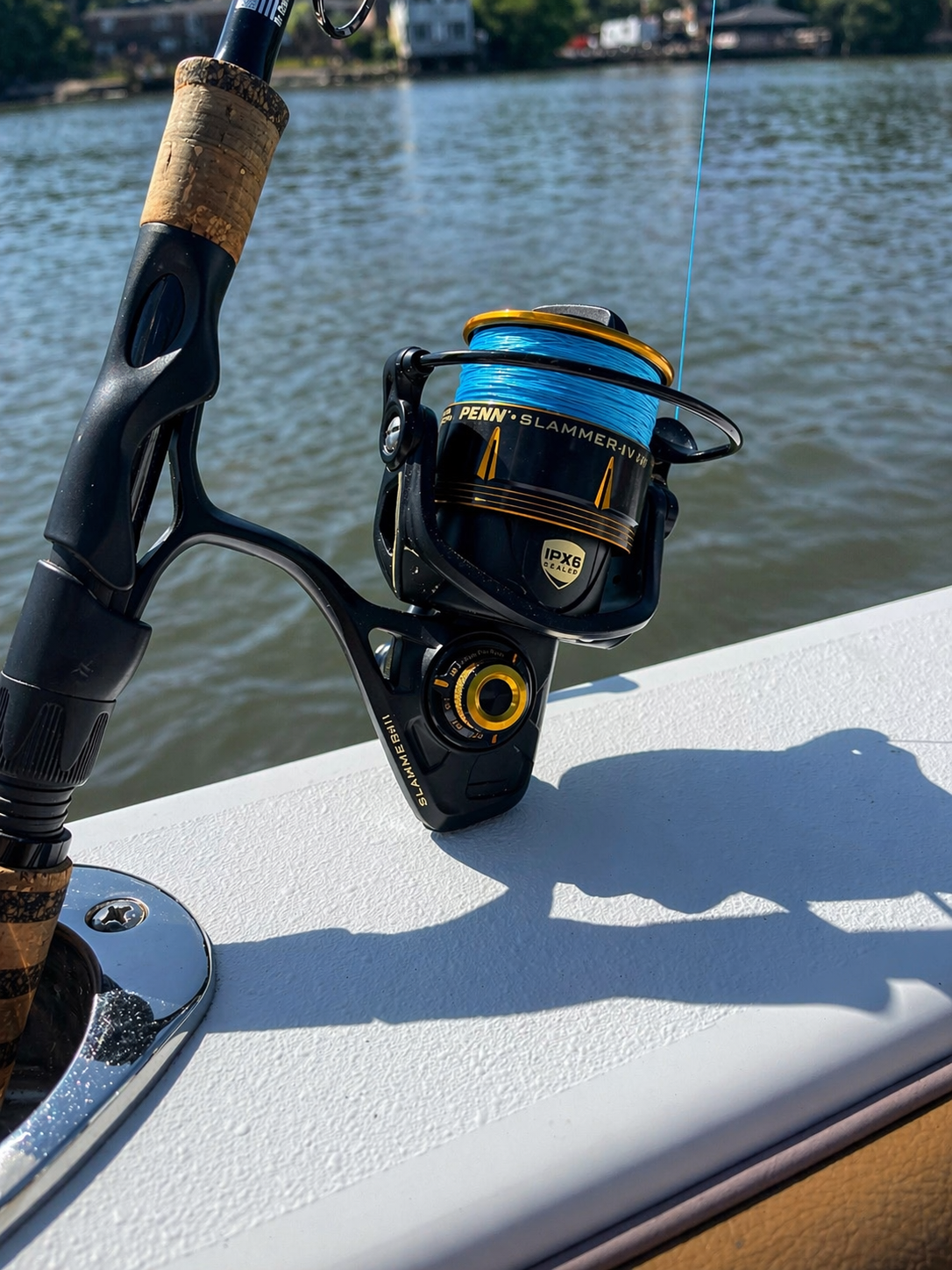
    If you fish in truly brutal conditions — heavy surf, saltwater spray, pouring rain, or sand-covered beaches — the Penn Slammer IV is in a different class entirely. Built around Penn’s IPX5 water-resistant sealed body, sealed drag system, and sealed bail arm, the Slammer IV is designed from the ground up to lock out every grain of sand and every drop of saltwater.

    The Slammer IV also features Penn’s Dura-Drag system, which builds on the HT-100 carbon fiber design to deliver silky smooth drag performance even under extreme sustained pressure. The top sizes deliver over 60 pounds of max drag — serious stopping power for large pelagic fish, trophy stripers, cobia, or big redfish.

    IPX5 Sealed Body
    Dura-Drag System
    Sealed Bail Arm
    60+ lb Max Drag
    Best for Heavy Surf & Harsh Conditions
    • IPX5-rated fully sealed body and side plate keep internals protected
    • Dura-Drag delivers smooth, powerful stopping power at high loads
    • Sealed bail arm and line roller prevent the corrosion that ruins lesser reels
    • Full metal body construction — zero flex under maximum load
    • Worth every dollar for anglers who fish hard in rough environments

    Best For: Surf fishing regulars, kayak anglers in coastal waters, and anyone whose gear gets genuinely beat up on the water.

    ⭐ Best All-Around

    #3 — Penn Spinfisher VII Saltwater Spinning Reel

    The Penn Spinfisher VII sits between the Battle IV and the Slammer IV in both price and features — and for a lot of anglers, it hits the perfect balance. Like the Slammer, it carries an IPX5-rated fully sealed body, but it adds Penn’s CNC Gear technology for an exceptionally smooth retrieve and even greater long-term gear durability. If you want one reel that handles the widest range of saltwater fishing scenarios, the Spinfisher VII is the one to look at.

    The Spinfisher VII is also available in a Long Cast surf version — featuring an extended spool designed specifically for surf anglers who need to launch bait past the breaking waves. If you’re serious about surf fishing for stripers, pompano, redfish, or drum, the Long Cast version is a genuine upgrade.

    IPX5 Fully Sealed
    CNC Gear Technology
    Long Cast Version Available
    HT-100 Drag
    Best Versatile Pick
    • CNC machined gears deliver buttery smooth retrieve and exceptional durability
    • IPX5 sealed body and drag protect internals in harsh surf conditions
    • Long Cast version adds real distance for beach and pier casting
    • Wide size range covers light inshore through heavy surf applications
    • Excellent value for a fully sealed, premium-grade saltwater spinning reel

    Best For: Anglers who want one high-quality reel that works across multiple inshore and surf fishing scenarios without having to choose between protection and budget.

    💪 Premium Pick

    #4 — Penn Torque II Saltwater Spinning Reel

    For anglers targeting large offshore species — or anyone who simply demands the absolute best Penn has to offer in a spinning format — the Penn Torque II is the answer. This is a premium saltwater spinning reel designed for serious heavy-duty applications: yellowfin tuna, large amberjack, big cobia, bull redfish, or any situation where your gear needs to perform without question.

    The Torque II features Penn’s most robust drag system, a full metal body with fully sealed internals, and precision-engineered gears that produce an exceptionally smooth retrieve even under maximum load. This isn’t a reel for the budget-conscious shopper — but for the tournament angler or dedicated offshore enthusiast who fishes hard for years, it’s built to deliver every time.

    Fully Sealed
    Premium Drag System
    Heavy Offshore Use
    Full Metal Body
    Tournament Grade
    • Penn’s highest-performance drag system — smooth under extreme loads
    • Fully sealed construction built for the most demanding saltwater environments
    • Precision engineering delivers buttery-smooth retrieve even under maximum pressure
    • Built for large pelagic species: tuna, cobia, amberjack, big redfish
    • The last saltwater spinning reel you’ll ever need to buy

    How to Choose the Right Penn Saltwater Spinning Reel for Your Setup

    With four strong models to choose from, the right Penn saltwater spinning reel comes down to a few key questions about how you fish:

    What Species Are You Targeting?

    Lighter inshore species like speckled trout, flounder, and smaller redfish don’t require the same drag power as large stripers, cobia, or offshore pelagics. Match your reel’s size and drag rating to your target species — overpowered gear is just dead weight.

    How Harsh Are Your Fishing Conditions?

    If you’re fishing calm inshore waters from a boat, the Battle III or Spinfisher VII offer excellent protection for those conditions. If you’re wading through the surf, fishing from a pier with constant spray, or regularly exposing your gear to sand and saltwater, the fully sealed Slammer IV or Torque II earns its premium price.

    What Reel Size Do You Need?

    Size Range Best Application Typical Target Species
    2500–4000 Inshore light tackle Speckled trout, flounder, small redfish, snook
    4000–6000 Heavier inshore & light surf Redfish, stripers, bluefish, sheepshead
    6000–8000+ Serious surf & offshore Large stripers, cobia, drum, offshore pelagics

    5 Tips for Getting the Most Out of Your Penn Saltwater Spinning Reel

    Even the toughest saltwater reel needs basic care to reach its full lifespan. These habits take minutes and can add years to your Penn spinning reel:

    🚿
    Rinse After Every Trip

    A thorough fresh water rinse after each saltwater outing prevents salt crystal buildup on external components — even on sealed reels.

    ⚙️
    Back Off the Drag

    Leaving your drag cranked tight compresses the washers over time. Back it off after each trip to maintain even drag performance.

    🧵
    Use Quality Braid

    Most saltwater spinning applications perform best with 20–65 lb braid. Add a mono or fluoro leader to absorb shock and protect against abrasion.

    🛢️
    Oil the Line Roller

    A small drop of reel oil on the line roller after each cleaning is one of the best ways to extend your reel’s lifespan in saltwater conditions.

    📦
    Store Smart

    After cleaning and drying, store your Penn reel in a cool, dry place away from direct sunlight and extreme heat — especially hot vehicles.

    Ready to Find Your Penn Saltwater Spinning Reel?

    Check current pricing and availability at the top fishing tackle retailers below. Penn reels are widely stocked — and they’re worth every dollar you invest in your saltwater setup.

  • Best Fishing & Boating Apparel for Sun Protection

    ⚠️ Affiliate Disclosure: This article contains affiliate links. If you purchase through our links, we may earn a small commission at no extra cost to you. We only recommend gear we’d actually wear on the water ourselves.

    2026 Buyer’s Guide

    UPF 50+ shirts, performance hats, and essential sun gear — everything you need to stay protected from sunup to sundown on the water.

    If you’ve ever walked off the water after a long day of fishing with a sunburn that makes putting on a shirt feel like a punishment, you already know — sun protection isn’t optional. It’s as essential as your tackle box.

    The good news? The fishing and boating apparel industry has come a long way. Today’s best UPF fishing shirts, sun-protective fishing hats, and performance fishing gear don’t just block UV rays — they’re breathable, fast-drying, and actually look sharp doing it. Whether you’re running offshore for tuna, working the flats for redfish, or spending a Saturday on the lake, the right UPF 50+ fishing apparel keeps you comfortable and protected all day long.

    Here’s our complete breakdown of the best sun protection fishing gear in 2026, with direct links to trusted retailers like Amazon, Bass Pro Shops, West Marine, TackleDirect, and Cabela’s.

    Why UPF Ratings Matter for Anglers & Boaters

    ☀️ UPF vs. SPF — What’s the Difference?

    Unlike SPF (which measures sunscreen effectiveness), UPF (Ultraviolet Protection Factor) measures how much UV radiation a fabric actually blocks. A UPF 50+ fishing shirt blocks over 98% of the sun’s UV rays — compared to a standard white cotton T-shirt, which typically offers a UPF rating of just 5.

    Here’s the kicker for anglers and boaters: you’re not just dealing with direct sunlight. Reflected UV off the water can increase your total UV exposure by up to 50%. That means a regular T-shirt isn’t just inadequate out on the water — it’s a genuine long-term skin health risk.

    Choosing UPF 50+ fishing apparel is one of the simplest, most effective decisions you can make before every trip.

    Best UPF Fishing Shirts for 2026

    ⭐ Best Overall

    AFTCO Samurai Performance Fishing Shirt

    ☀️ UPF 50+
    💰 ~$70–$85
    🏪 Amazon · Bass Pro · TackleDirect · Cabela’s

    If one shirt earns the title of gold standard in sun-protection fishing apparel, it’s the AFTCO Samurai. Built on AFTCO’s proprietary AFTECH fabric system with AFBLOCK UPF 50+ protection, the Samurai is engineered for full days on the water without compromise. It’s stain-resistant, moisture-wicking, antimicrobial, and loaded with 8 functional pockets — including a zippered security pocket and rod holder loops.

    AFTCO has been making fishing gear since 1958, and the Samurai reflects over six decades of angler feedback baked into a single shirt. This is the best long-sleeve fishing shirt that serious offshore anglers, charter captains, and tournament fishermen reach for without thinking twice.

    🏆 Best for Inshore & Tournament Anglers

    Huk Icon X Long Sleeve Hoodie

    ☀️ UPF 50+
    💰 ~$60–$90
    🏪 Amazon · Bass Pro · TackleDirect · Cabela’s

    Huk built its reputation on the original Icon shirt back in 2014, and the Icon X Hoodie is the evolution of that vision. It features body-mapped ventilation, an expanded full-back mesh panel, raglan sleeves for unrestricted casting motion, and a hood for full face and neck coverage. The cooling-fiber fabric is engineered to reduce your core temperature by as much as 6–8°C on hot summer days.

    Huk sponsors some of the biggest fishing tournaments in the country — the Bassmaster Classic, MLF circuits, and the Huk Big Fish Classic — so this is tournament-tested sun protection fishing gear you can trust. Available in women’s and youth sizing too, making it one of the most versatile UPF hoodie fishing shirts on the market.

    💲 Best Budget-Friendly Option

    Columbia PFG Terminal Tackle Long Sleeve Shirt

    ☀️ UPF 50
    💰 ~$40–$55
    🏪 Amazon · Bass Pro · West Marine · Cabela’s

    Not every angler wants to spend $80 on a fishing shirt — and you don’t have to. Columbia’s Performance Fishing Gear (PFG) Terminal Tackle long sleeve delivers solid UPF 50 sun protection at a price point that won’t blow your fishing budget. Columbia’s Omni-Shade technology blocks both UVA and UVB rays, while Omni-Wick pulls moisture away from your skin. It’s a reliable, widely available option and one of the best budget fishing sun shirts you’ll find.

    Best Fishing Hats for Sun Protection

    🤿 Best Boonie Hat

    Salty Crew Alpha Tech Boonie Hat

    💰 ~$35–$45
    🏪 Amazon · TackleDirect · West Marine

    When you’re spending 8+ hours on the water, a wide-brim fishing boonie hat is one of the smartest investments you can make. The Salty Crew Alpha Tech Boonie is built from 100% water-resistant polyester, features a wide EVA brim for serious face and neck coverage, and includes a removable chin strap for windy offshore days. It’s lightweight, packable, and looks exactly as rugged as it is.

    Salty Crew launched out of San Diego in 2013 with a mission to build gear worthy of real watermen — and this hat has become a go-to sun protection hat for fishing among offshore and coastal anglers who want function without sacrificing style.

    🧢 Best Performance Cap

    AFTCO Palomar Performance Fishing Hat

    💰 ~$30–$40
    🏪 Amazon · Bass Pro · West Marine · TackleDirect

    For anglers who prefer a performance fishing cap over a wide brim, AFTCO’s Palomar hat is built with the same AFTECH philosophy behind their shirts — moisture-wicking sweatbands, UPF-rated materials, and sun-blocking brims that extend farther than your average baseball cap. It sits comfortably through long, hot days on the water and transitions from the boat to a restaurant without looking out of place.

    Best Sun Protection Accessories for Fishing

    🌊 Best Face & Neck Protection

    Huk Pursuit Neck Gaiter / Face Gaiter

    ☀️ UPF 30–50+
    💰 ~$20–$30
    🏪 Amazon · Bass Pro · TackleDirect

    The neck and face are two of the most exposed areas for anglers — and a quality fishing neck gaiter solves both in one lightweight piece. Huk’s fishing gaiters are made with UPF 30–50+ performance fabric, offer full face coverage, and stay thin enough to be comfortable even on the hottest summer days. Pair one with any UPF shirt above and you’ve got nearly full-body UV coverage dialed in. This is genuinely the most affordable upgrade you can make to your fishing sun protection kit.

    🌅 Best Cold-Morning Layer

    AFTCO Reaper Technical Hoodie

    ☀️ UPF 50+
    💰 ~$65–$85
    🏪 Amazon · West Marine · TackleDirect · Cabela’s

    Early morning starts on the water can be surprisingly cool — but by midday you’re cooking. The AFTCO Reaper Technical Hoodie bridges that gap perfectly. Built from 100% recycled polyester with AFBLOCK UPF 50+ protection, it works as a mid-layer and as a standalone sun-protection piece when the day heats up. Bonus: AFTCO donates 10% of all profits to marine conservation, making this a purchase that does double duty for you and the fisheries you love.

    What to Look for in Fishing Sun Protection Apparel

    Shopping for the best UPF fishing gear can feel overwhelming with so many options. Here’s a quick checklist when evaluating any piece of sun protection fishing apparel:

    • UPF 50+ rating — the gold standard; blocks 98%+ of UV radiation
    • Moisture-wicking & quick-dry fabrics — comfort and performance when it’s hot
    • Lightweight construction — breathability matters more than thickness
    • Coverage design — hoods, thumb holes, and extended collars add meaningful protection
    • Antimicrobial treatment — essential for multi-day trips and offshore charters
    • Fit for casting — raglan sleeves and 4-way stretch allow a full range of motion
    • Reflected UV awareness — don’t forget the sun bounces off the water; coverage below the chin matters

    Where to Buy Fishing Sun Protection Gear

    All of the fishing apparel featured above is available at major fishing and outdoor retailers. Here’s a quick overview of each:

    🛒 Amazon Widest selection, fast shipping, and easy returns. Best for comparing prices across brands.Shop Amazon

    🎣 Bass Pro Shops Carries AFTCO, Huk, Columbia PFG, and more. Free shipping on orders $50+.Shop Bass Pro

    ⚓ West Marine Excellent selection for boating and fishing apparel. Great for Salty Crew and AFTCO.Shop West Marine

    🎯 TackleDirectOne of the widest online selections of fishing-specific apparel brands.Shop TackleDirect

    🏔️ Cabela’s Strong AFTCO and Huk inventory with frequent sales and seasonal deals.Shop Cabela’s

    🏆 Final Verdict: Our Top Sun Protection Picks

    Protecting yourself from the sun while fishing isn’t just about comfort — it’s a long-game investment in your health. After a full day on the water, the difference between a quality UPF 50+ fishing shirt and a cotton tee is the difference between heading home ready to go again tomorrow, or peeling sunburned skin for a week.

    For the best overall sun protection fishing shirt, the AFTCO Samurai is hard to beat. For anglers who want bold style with tournament-proven performance, the Huk Icon X Hoodie delivers. And if you’re building a complete fishing sun protection kit, layering a Salty Crew boonie hat, a Huk neck gaiter, and an AFTCO technical shirt gives you about as close to bulletproof UV coverage as you can get on the water.

    Get out there. Just don’t forget your sun protection first.

    Browse All on Amazon

    🎣 Bass Pro Shops
    ⚓ West Marine

  • How to Catch Bull Redfish: The Ultimate Tackle Setup & Regional Bait Guide

    How to Catch Bull Redfish: The Ultimate Tackle Setup & Regional Bait Guide

    How to Catch Bull Redfish: The Ultimate Tackle Setup & Regional Bait Guide (2025)

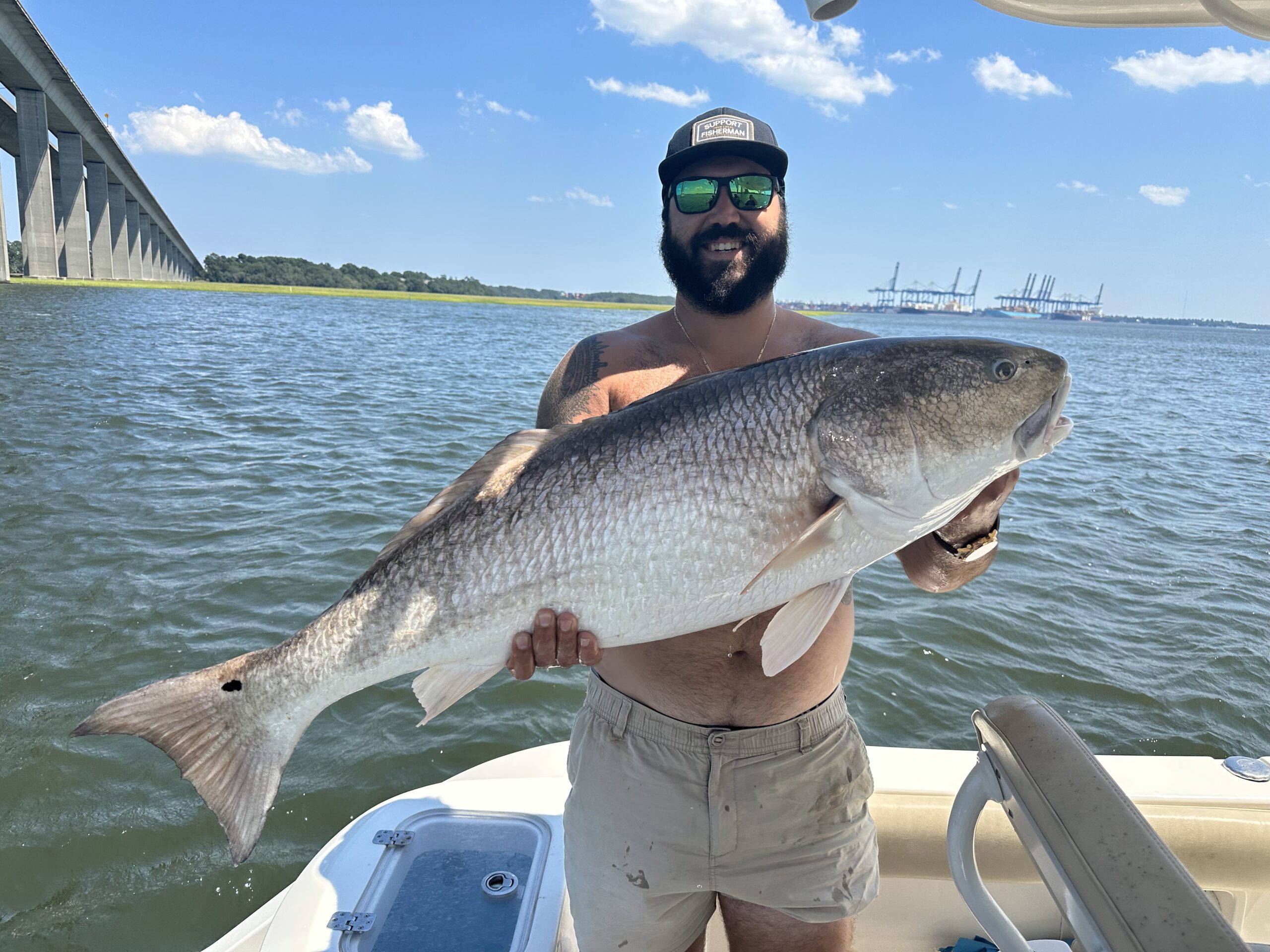
    Few moments in inshore fishing compare to watching a 40-inch bull redfish bulldoze through a shallow flat and peel drag off your reel. Bull redfish — commonly defined as oversized reds above the slot limit, typically 27 inches and up — are one of the most powerful and accessible trophy fish along the Gulf Coast and Southeast Atlantic. They’re strong, often predictable, and very catchable once you have the right gear in your hands.

    Whether you’re wade fishing South Texas grass flats, chunking cut mullet through South Carolina inlets, or working the surf along Florida’s Space Coast, this guide has you covered. We break down the best rod and reel combos, leader setups, hook sizes, and proven rigs — plus a regional tackle and bait comparison table so you know exactly what to throw based on where you’re fishing.

    Note: This article contains affiliate links to Amazon, Bass Pro Shops, and West Marine. If you make a purchase through these links, we may earn a small commission at no extra cost to you. We only recommend gear we trust.


    Best Rod & Reel Combo for Bull Redfish

    Bull reds are not finesse fish. A 40-pound red ripping through an oyster-lined creek channel demands gear built for punishment — backbone to control a big fish and a drag system smooth enough to survive long, powerful runs without snapping off.

    Rod: Medium-Heavy Spinning, 7’6″–8’6″

    For bull redfish, reach for a medium-heavy to heavy power spinning rod between 7’6″ and 8’6″, rated for 20–40 lb line. The extra length pays dividends in casting distance from the surf or off jetties, and the added backbone keeps sustained pressure on big fish without wearing you out mid-fight. Look for a moderate-fast action — responsive enough to telegraph a subtle pickup, but with enough mid-section flex to absorb those signature headshakes that bull reds use to throw hooks.

    Top Rod Picks:

    Penn Battalion II Surf Spinning Rod

    Excellent all-around surf rod with great sensitivity and backbone. A go-to for inshore and surf anglers alike.

    St. Croix Mojo Surf 8’0″ Heavy

    A premium pick for anglers who want high-end SCII graphite performance and a lifetime warranty to boot.

    Ugly Stik Elite Spinning Rod

    Budget-friendly bruiser with legendary durability. Handles serious fish without a serious price tag.

    Reel: 4000–6000 Series Spinning with 20+ lb Drag

    Match your rod with a 4000–6000 series spinning reel featuring a smooth, sealed drag system rated at 20 lbs or better. Bull reds make long, powerful first runs — if your drag stutters under load, you’ll lose fish. Sealed bearings are a worthwhile investment if you’re regularly fishing saltwater.

    Top Reel Picks:

    Penn Battle IV 5000

    Arguably the best value saltwater spinning reel under $150. Full metal body, HT-100 drag washers, legendary durability.

    Daiwa BG 4000

    Silky-smooth drag, machined aluminum body, an absolute workhorse. A flat favorite among inshore guides up and down the coast.

    Shimano Stradic FL 4000

    Premium upgrade with Hagane gearing and exceptional drag consistency under sustained load from big fish.


    Line Setup: Braid to Fluorocarbon

    Main Line: 20–30 lb Braid

    Spool up with 20–30 lb braided line. Braid’s thin diameter lets you pack more line onto your spool, dramatically extends casting distance, and gives you zero-stretch sensitivity for detecting subtle pickups. For most bull red situations, 30 lb braid is the sweet spot.

    PowerPro Spectra 30 lb Braid

    The industry standard. Reliable, consistently round, and available at every tackle shop on the coast.

    Sufix 832 Advanced Superline 30 lb

    8-carrier construction with GORE Performance Fiber for smoother casting and noticeably longer line life.

    Leader Material: 40–60 lb Fluorocarbon, 24–48″

    This is where a lot of anglers quietly lose fish. Bull reds hang around rough, abrasive structure — oyster bars, barnacled bridge pilings, rock jetties. A wimpy leader gets shredded fast. Use 40–60 lb fluorocarbon cut to 24–36 inches for most applications, bumping to 36–48 inches around heavy structure or strong surf. Connect braid to leader with a double uni knot or an FG knot (slimmer and stronger for long casts).

    Seaguar Blue Label 40 lb Fluorocarbon

    The gold standard in leader material. Double-structure extrusion for strength and suppleness. Our top pick for most conditions.

    Seaguar Blue Label 60 lb Fluorocarbon

    Step up to 60 lb when fishing around heavy oyster structure, rock jetties, or fast inlet current.


    The 2 Best Rigs for Bull Redfish

    1. Fish Finder Rig (Carolina Rig) — #1 Most Productive Setup

    The fish finder rig is the top-producing setup for fishing natural bait in the surf, inlets, tidal creek mouths, and deep channel edges. The sliding egg sinker lets a fish pick up your bait and move with it before feeling any weight — dramatically increasing hook-up rates.

    What You Need:

    • 1–3 oz egg sinker (heavier in strong current)
    • Plastic bead (protects your knot from sinker impact)
    • Size 3 or 4 barrel swivel
    • 24–36″ fluorocarbon leader (40–60 lb)
    • 5/0–7/0 circle hook

    How to Build It:

    1. Thread main braid through the egg sinker
    2. Slide on a plastic bead
    3. Tie to one end of the barrel swivel
    4. Attach fluorocarbon leader to the other swivel end
    5. Tie on your circle hook

    Pro Hookset Tip: Don’t jerk the rod when you feel a bite. Let the fish move, wait for the line to load up, then sweep sideways with steady pressure. The circle hook drives itself into the corner of the mouth almost every time.

    Gamakatsu Octopus Circle Hooks 6/0

    Ultra-sharp and trusted by tournament anglers. Consistent corner-of-the-mouth hookups for safe, easy release.

    Owner Mutu Light Circle Hooks 5/0

    Exceptionally sharp with a wide gap. Light wire won’t impede live bait action — but strong enough for any bull red.

    Egg Sinker Assortment 1–3 oz

    Keep a mixed pack on hand. Go heavier in fast current or strong surf, lighter in calm backwater conditions.

    2. Popping Cork Rig — Deadly in Shallow Flats & Marsh Creeks

    When you’re fishing shallow grassy flats, tidal marsh creeks, or near oyster beds, a popping cork setup can absolutely light up your bite. The loud chugging splash mimics shrimp and baitfish fleeing, triggering aggressive feeding responses in reds cruising the shallows. Keep your leader at 18–24 inches so the bait rides just above grass or mud bottom. Best baits: live shrimp through the horn, fresh-cut mullet, or a lively finger mullet.

    Billy Bay Cajun Thunder Popping Cork

    Classic design with a concave face that throws water and sound on every twitch. The original marsh cork — still the best.

    Calcutta Rattling Popping Cork

    Added internal rattle for extra fish-calling power in stained or murky water. A top choice for Louisiana marsh fishing.


    Hook Size Guide for Bull Redfish

    Hook selection is one of the most overlooked variables in bull red fishing. Use the wrong size and you’ll either miss bites or lose fish at the boat.

    • Circle Hooks 5/0–7/0 — The best choice for live and cut bait. Nearly self-setting, producing corner-of-the-mouth hookups that make safe release easy. Mandatory for CPR fishing on oversize reds.
    • J-Hooks 3/0–5/0 — Effective under a popping cork with live shrimp. Require an active hookset.
    • Kahle Hooks 4/0–6/0 — A solid middle-ground option. Excellent with cut mullet, blue crab, or menhaden chunks.

    Mustad Demon Perfect Circle Hook 6/0

    Affordable, consistent, and used by guides up and down the coast. The no-brainer circle hook for bull reds.


    Best Baits for Bull Redfish

    Bull reds are scent-driven, opportunistic predators — especially in murky or fast-moving water. Fresh and local will almost always beat frozen and generic.

    • Cut Mullet — The #1 surf and inlet bait. Oily, smelly, and irresistible. Fresh is always better than frozen.
    • Live or Fresh-Dead Shrimp — Deadly year-round, especially under a popping cork in shallow water.
    • Blue Crab (halved or quartered) — Particularly effective during crab-heavy months. Bull reds love crabs.
    • Live Finger Mullet — Hard to beat for big fish. Catch them fresh with a cast net if you can.
    • Menhaden (Pogies) — Extremely oily and effective, especially in Gulf Coast inlets and passes.

    Regional Tackle & Bait Comparison Table

    Bull redfish are found from Texas to Virginia, but the way you fish for them changes significantly by region. Use this table to dial in your approach before you hit the water.

    Region Primary Habitat Best Rig Hook Size Top Baits Leader Sinker Best Tide
    Texas Gulf Coast
    (Laguna Madre, Matagorda, Galveston)
    Shallow grass flats, back bays, passes Popping Cork; Fish Finder in passes 4/0–6/0 Circle Live shrimp, finger mullet, cut mullet, crab 40–50 lb fluoro 1–2 oz Incoming; tide changes in passes
    Louisiana & Mississippi
    (Delacroix, Biloxi Marsh, Chandeleur)
    Marsh creeks, shallow bays, barrier islands Popping Cork; Unweighted live bait 3/0–5/0 Circle or J Live shrimp, pogies, crab chunks 40 lb fluoro 1/2–1 oz Incoming flood tide; dawn/dusk
    Florida Gulf Coast
    (Tampa Bay, Charlotte Harbor, Homosassa)
    Flats, mangrove edges, grass beds, passes Popping Cork (flats); Fish Finder (passes) 4/0–6/0 Circle Live shrimp, pinfish, cut ladyfish, crab 40–50 lb fluoro 1–2 oz Falling outgoing tide along mangroves
    Florida Atlantic / Space Coast
    (Indian River, Mosquito Lagoon)
    Broad shallow lagoons, grass flats Popping Cork; Free-lined live bait 4/0–5/0 Circle Live shrimp, live mullet, crab, cut mullet 40 lb fluoro 1/2–1 oz or none Moving tides; wind tides in lagoon
    Georgia & South Carolina
    (Golden Isles, Port Royal, Charleston)
    Tidal creeks, inlets, oyster bars, surf Fish Finder (inlets/surf); Popping Cork (creeks) 5/0–7/0 Circle Cut mullet, live shrimp, blue crab, pogies 50–60 lb fluoro 2–3 oz 2 hrs either side of tide change
    North Carolina
    (Outer Banks, Pamlico Sound, Hatteras)
    Surf, inlets, sounds, creek mouths Fish Finder (surf & inlets) 6/0–7/0 Circle Fresh cut mullet, spot, menhaden, crab 50–60 lb fluoro 2–4 oz Moving tide in inlets; dawn surf bite
    Virginia
    (Chesapeake Bay, Back Bay, Chincoteague)
    Bay channels, surf, shoal water Fish Finder; Heavy Carolina Rig in surf 6/0–7/0 Circle Cut spot, cut mullet, crab, menhaden 50–60 lb fluoro 2–4 oz Falling tide in channels; fall migration
    Regional conditions vary seasonally. Always verify local regulations — bull redfish above the slot are catch-and-release only in most states.

    Pro Tips for More Bull Redfish Hookups

    • Fish the moving tide. The two hours before and after a tide change are consistently the most productive windows. Bull reds use tidal movement to ambush baitfish at creek mouths, channel edges, and around points.
    • Target structure religiously. Oyster bars, rock jetties, bridge pilings, and channel drop-offs are highways for big reds. If there’s structure nearby, there’s probably a bull red nearby too.
    • Read “nervous water.” Subtle surface ripples, V-wakes, or tailing fish in skinny water are clear signals of actively feeding reds. Slow down, approach quietly, and cast ahead of the fish.
    • Use a fighting belt in the surf. A gimbal fighting belt takes the edge off long fights with large fish and lets you apply more sustained pressure.
    • Always check your regulations. Bull redfish are catch-and-release only above the slot limit in most Gulf and Southeast Atlantic states. Fines for keeping oversized reds are steep.

    Complete Bull Redfish Gear Checklist

    Item Specification Shop Now
    Rod 7’6″–8’6″ Medium-Heavy Spinning Amazon
    Bass Pro
    Reel 4000–6000 Series Spinning, 20+ lb drag Amazon
    West Marine
    Main Line 20–30 lb Braided Line Amazon
    Leader 40–60 lb Fluorocarbon, 24–48″ Amazon
    Bass Pro
    Circle Hook Circle Hook 5/0–7/0 Amazon
    Popping Cork Hook Circle or J-Hook 3/0–5/0 Amazon
    Sinker 1–3 oz Egg Sinker Amazon
    Recommended Extras
    Barrel Swivels Size 3 or 4 Amazon
    Plastic Beads 6–8mm Rig Beads Amazon

    Final Thoughts

    Bull redfish are one of inshore fishing’s great equalizers — accessible enough for beginners with the right gear, yet powerful and unpredictable enough to humble experienced anglers. Start with a solid medium-heavy spinning combo, 30 lb braid, a fluorocarbon leader, and the right rig for your region. Keep an eye on the comparison table as seasons shift — bull reds behave very differently in the clear grass flats of South Texas than they do in the turbid, tidal creeks of coastal South Carolina.

    Above all: know your local regulations, use circle hooks for clean releases, and get out there on a moving tide. Tight lines.


    Disclosure: This article contains affiliate links to Amazon, Bass Pro Shops, and West Marine. Purchasing through these links supports this site at no additional cost to you. All gear recommendations are based on real-world fishing experience — we only recommend products we’d use ourselves.

  • Saltwater Boat Transducers & Multifunction Displays: The Complete Buying Guide (2026)

    Saltwater Boat Transducers & Multifunction Displays: The Complete Buying Guide (2026)


    2026 Buyer’s Guide

    Saltwater Boat Transducers & Multifunction Displays: The Complete Buying Guide (2026)

    Whether you’re chasing offshore wahoo, inshore redfish, or reef snapper — the right fish finder setup changes everything. We break down transducer types, frequencies, sonar tech, top MFD brands, and exactly how to match them together so you buy right the first time.

    Affiliate Disclosure: This article contains affiliate links to Amazon, West Marine, Bass Pro Shops, and other retailers. If you purchase through one of our links, we may earn a small commission at no extra cost to you. We only recommend gear we’d mount on our own boats.

    Walk into any West Marine or scroll through Bass Pro Shops’ marine electronics section and the options are genuinely overwhelming. Garmin or Lowrance? CHIRP or DownScan? Transom-mount or thru-hull? And which transducer actually works with which display?

    The good news: once you understand a handful of core concepts — frequency, sonar type, mounting style, and brand ecosystems — the decision gets a lot cleaner. This guide walks you through all of it, with a side-by-side comparison table and affiliate links to the best prices online, so you can spend less time researching and more time on the water.

    What Is a Marine Transducer — and Why Does It Matter in Saltwater?

    A marine transducer is the underwater sensor that makes your fish finder work. It converts electrical pulses into sound waves and sends them into the water column. When those waves bounce off the bottom, baitfish, structure, or a suspended grouper, the returning signal gets translated into the image on your screen.

    In saltwater fishing, transducer selection matters more than many anglers realize — for two key reasons:

    • Salt water is denser and more conductive than fresh water, which directly affects how sonar signals travel and how deep they can reliably reach.
    • Saltwater environments are corrosive. Transducers are submerged while running, exposed to constant salt, and subject to electrolysis from surrounding metal. A transducer not designed for salt water will degrade fast.

    Add in high-speed offshore running, deep-water drops, and the need to identify structure with precision — and it’s clear that picking the wrong transducer is an expensive mistake worth avoiding upfront.

    🎣 Pro Tip: Always buy a transducer explicitly rated for saltwater/marine use. Look for corrosion-resistant housings, marine-grade cable, and sealed connectors. Rinsing with fresh water after every trip extends transducer life significantly.

    Understanding Transducer Frequencies

    Frequency — measured in kilohertz (kHz) — is the most fundamental spec on any saltwater fish finder transducer. It determines how deep your sonar can reach and how detailed the image is. There’s a direct tradeoff: higher frequencies produce sharper images but lose penetration in deep water; lower frequencies penetrate deeper but produce less detail.

    Frequency Range Depth Range Image Detail Best Application
    28–50 kHz (Low) 600–3,000+ ft Low Deep offshore, bluewater, canyon fishing
    83–200 kHz (Medium) 20–600 ft Moderate Nearshore reefs, wrecks, inshore structure
    200–455 kHz (High) Up to 300 ft High Inshore flats, channels, grass edges
    455–800 kHz+ (Ultra-High) Up to 200 ft Exceptional Shallow inshore, SideScan/DownScan imaging

    The best approach for most saltwater anglers? A dual-frequency or CHIRP-capable transducer that covers multiple frequency ranges simultaneously. CHIRP (more on this below) sweeps across a range of frequencies in a single pulse — giving you the benefits of multiple frequencies without switching back and forth.

    CHIRP, DownScan, SideScan & Live Sonar: What’s the Difference?

    Modern marine sonar technology has evolved dramatically in the past decade. Understanding the four main types will help you decide which combination belongs on your boat.

    CHIRP Sonar — The Gold Standard

    CHIRP (Compressed High-Intensity Radar Pulse) is now the baseline technology for any serious saltwater fish finder. Unlike traditional sonar that fires a single fixed frequency, CHIRP sends a continuous sweep of frequencies in each pulse. The result: dramatically crisper fish arches, better target separation (the ability to distinguish individual fish in a school), and superior depth performance. If your MFD and transducer both support CHIRP — and most current models do — there’s no reason not to use it.

    DownScan / DownVü / Down Imaging — Photo-Realistic Bottom Views

    DownScan sonar (called DownVü by Garmin, Down Imaging by Humminbird, StructureScan Down by Lowrance/Simrad) fires a high-frequency, razor-thin beam straight down. The result is an almost photographic image of the structure beneath your boat — you can clearly see rock ledges, wreck timbers, coral heads, and bait schools rather than just blurry blobs on a traditional screen. This is an essential tool for reef fishing, wreck hunting, and working nearshore structure.

    SideScan / SideVü / Side Imaging — Map the Bottom Around You

    SideScan sonar shoots beams to the left and right simultaneously, covering wide swaths of bottom on both sides of the boat. It’s the fastest way to find new structure — wrecks, rock piles, grass lines, drop-offs — across a large area. Many serious saltwater anglers use SideScan to locate new spots, then switch to DownScan or CHIRP to work them. It’s one of the most productive features available in modern saltwater fish finders.

    Live Sonar — Real-Time Fish Tracking

    Live sonar (Garmin Panoptix LiveScope, Humminbird MEGA Live, Lowrance ActiveTarget 2) is the newest and most dramatic category. These systems produce real-time video-like sonar showing individual fish moving in live action — you can watch a redfish pick up a lure, or see tarpon swimming beneath the boat before you cast. Originally a bass fishing tool, live sonar has become enormously popular with inshore saltwater guides. It requires a dedicated transducer and a compatible MFD.

    ⚠️ Important: Not all MFDs support all sonar types. Entry-level units often only support traditional CHIRP. Mid-range and flagship units typically add DownScan and SideScan. Live sonar always requires a separate compatible module. Match your transducer to what your MFD can actually use.

    Top MFD Brands for Saltwater Fishing

    Your multifunction display (MFD) is the brain of the entire system — integrating GPS chartplotting, sonar, and often radar, weather overlays, and engine monitoring in one screen. Here are the four brands that dominate the saltwater market.

    🥇 Garmin — ECHOMAP UHD2 and GPSMAP Series

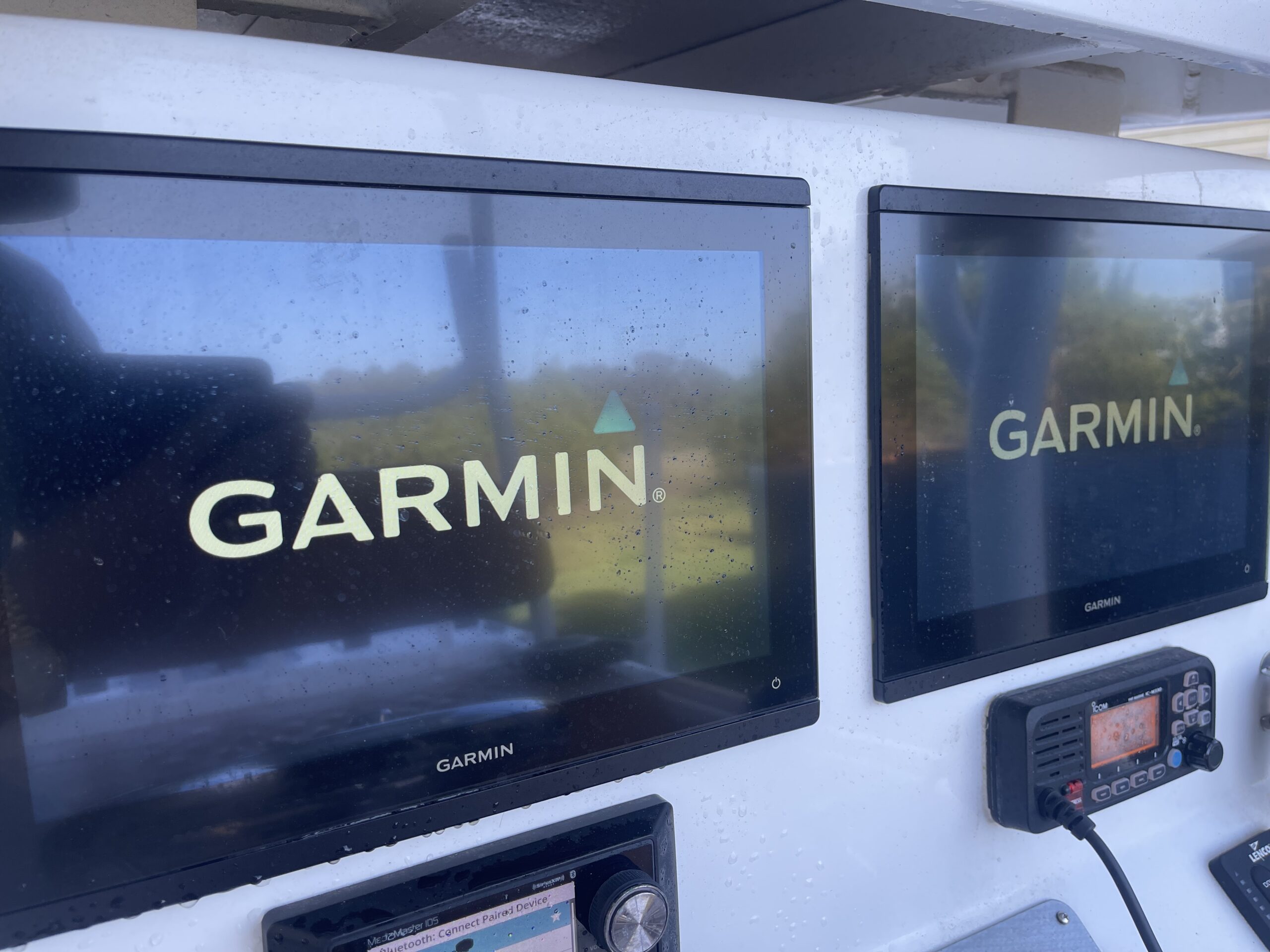
    Garmin is the most popular marine electronics brand in the US, and their lineup covers every price point. The ECHOMAP UHD2 series is an excellent entry-to-mid-range option with built-in CHIRP and the ability to add GT transducers for SideVü and DownVü. The flagship GPSMAP 8400 and 9400 series offer large touchscreens, full networking, Panoptix LiveScope compatibility, and stunning chart resolution via Navionics or Garmin BlueChart g3.

    Garmin’s biggest advantage is ecosystem depth: their transducers, trolling motors, autopilots, radar, and VHF radios all talk to each other natively through a single network.

    Best-selling Garmin transducers for saltwater:

    • GT52HW-TM — Dual-CHIRP transom mount with DownVü + SideVü. Best all-around choice for inshore and nearshore saltwater use.
    • GT56UHD-TM — Ultra-HD transducer for exceptional clarity to 800+ feet. Pairs perfectly with GPSMAP units.
    • Panoptix LVS34 — The LiveScope transducer for real-time live sonar. A game-changer for inshore guides.

    🥈 Lowrance — HDS Pro and HOOK Reveal Series

    Lowrance has a fiercely loyal following among serious structure and offshore fishermen. Their HDS Pro and HDS Live chartplotters are premium workhorses with ActiveImaging 3-in-1 transducer compatibility. The HOOK Reveal series is their budget-friendly entry point and comes with a transducer bundled — an excellent first upgrade for center console owners stepping up from a basic fishfinder.

    Lowrance’s ActiveTarget 2 live sonar has become a go-to for inshore saltwater guides, and their integration with the Lowrance Ghost trolling motor makes them a strong choice for anglers building a complete electronic setup.

    Best Lowrance transducers for saltwater:

    • ActiveImaging HD 3-in-1 — CHIRP + StructureScan HD + traditional sonar in one housing. Excellent for reef and structure fishing.
    • TotalScan Transom Mount — Versatile all-in-one for boats in the 20–35 ft range.
    • ActiveTarget 2 — Live sonar transducer module for real-time fish tracking.

    🥉 Simrad — NSS evo3S and NSX Series

    Simrad is the preferred brand of serious offshore and bluewater anglers running larger boats. Their NSS evo3S and NSX chartplotters feature large glass-bridge-style displays with industry-leading sunlight readability — critical when you’re running 30 miles offshore in full sun. Simrad integrates seamlessly with autopilots, radar, VHF, and engine displays, making it the top choice for center consoles and sportfishers in the 26–50 ft range.

    Crucially: Simrad and Lowrance share the same transducer ecosystem (both are owned by Navico/Mastervolt). Most Lowrance transducers work with Simrad MFDs using a connector adapter — a significant advantage if you’re upgrading or mixing equipment.

    Humminbird — HELIX and SOLIX Series

    Humminbird is one of the best-selling brands at Bass Pro Shops and Cabela’s, and for good reason — their HELIX series delivers exceptional value at the mid-range price point. Their MEGA Down Imaging+ and MEGA Side Imaging+ technologies are class-leading in image resolution and detail, often outperforming competitors at the same price.

    The SOLIX series is Humminbird’s flagship for serious offshore use — large touchscreens, full networking, and MEGA Live Imaging (their answer to Garmin LiveScope). For anglers who want best-in-class imaging without the Garmin price premium, SOLIX is worth serious consideration.

    2026 MFD & Transducer Comparison Table

    Use this table to compare the top saltwater fish finder systems side by side. Links go to the best current pricing at major retailers.

    Brand / Series Best MFD Models CHIRP DownScan SideScan Live Sonar Best Transducer Match Best For MFD Price Range Buy
    Garmin ECHOMAP UHD2 6″ / 7″ / 9″ ⚠️ Add-on GT52HW-TM Inshore / nearshore $1200–$1400 Amazon
    Garmin GPSMAP 8400/9400 10″–16″ touch ✅ LiveScope GT56UHD-TM / LVS34 All saltwater / offshore $1,200–$4,000+ Amazon
    Lowrance HOOK Reveal 5″ / 7″ / 9″ ⚠️ Select models TotalScan (bundled) Entry-level inshore $200–$500 Amazon
    Lowrance HDS Pro / Live 9″ / 12″ / 16″ ✅ ActiveTarget 2 ActiveImaging HD 3-in-1 Nearshore / offshore structure $900–$2,800 Amazon
    Simrad NSS evo3S 9″ / 12″ / 16″ ✅ ActiveTarget 2 Lowrance ActiveImaging HD* Offshore / large center consoles $2,300-4,500+ Amazon
    Humminbird HELIX 10/12 10″ / 12″ ✅ MEGA Down ✅ MEGA Side ⚠️ Add-on XNT 9 HW 180 T / MEGA SI+ Mid-range inshore / bay boats $600–$1,400 Amazon
    Humminbird SOLIX 12/15 12″ / 15″ touch ✅ MEGA Down+ ✅ MEGA Side+ ✅ MEGA Live MEGA 360 / MEGA Live Serious offshore / tournament $1,400–$3,200 Amazon

    *Simrad and Lowrance share the Navico transducer ecosystem; adapter may be required. Prices are approximate 2026 retail ranges — check retailer links for current pricing.

    How to Match the Right Transducer to Your MFD: A 5-Step Framework

    This is where most buyers get tripped up — and where a little knowledge saves a lot of money. Follow these five steps in order.

    1
    Stay within the same brand ecosystem

    Garmin transducers are engineered for Garmin MFDs, Humminbird for Humminbird, Lowrance/Simrad for their shared platform. Mixing brands usually means losing access to advanced sonar modes (SideVü, MEGA Imaging) even if the unit appears to function. When in doubt, stay native.

    2
    Match the connector type

    Each brand uses its own proprietary connector on the back of the MFD. Native connections always outperform adapter connections. Check your MFD’s transducer port specs before purchasing any transducer — this is an easy step that prevents an expensive return.

    3
    Match frequency to your fishing depth

    Inshore flats and structure under 200 feet? Prioritize high-frequency CHIRP (200–455 kHz) for image quality. Running offshore to 300–1,000 feet? You need a transducer rated for that depth — not all are, and your spec sheet will tell you the maximum rated depth. Many anglers fish both zones, making a dual-frequency or CHIRP transducer the smart choice.

    4
    Match mounting style to your hull

    Transom-mount is simplest and most common. In-hull (shoot-through) works on fiberglass hulls without a below-waterline hole — great for saltwater corrosion prevention. Thru-hull delivers best high-speed performance but requires professional installation. See the full mounting section below for details.

    5
    Check your MFD’s sonar channel count

    Entry-level MFDs often have one sonar channel (CHIRP only — no DownScan or SideScan). Mid-range units typically have two (CHIRP + DownScan). Premium units have three or more (CHIRP + DownScan + SideScan). Buy the transducer that matches the sonar channels your MFD can actually run — overspending on a 3-in-1 transducer for a single-channel MFD is a common and costly mistake.

    Transducer Mounting Styles: Transom, In-Hull, and Thru-Hull

    Mount Type Installation Performance Saltwater Suitability Best For
    Transom Mount DIY-friendly Good ✅ Excellent Most boats; first-time installs
    In-Hull (Shoot-Through) DIY-friendly Moderate ✅ Best (no hull penetration) Fiberglass hulls; corrosion-averse
    Thru-Hull Professional recommended Best (especially at speed) ⚠️ Good with proper sealing Offshore high-speed boats; serious anglers

    Quick-Reference: Best Transducer by Fishing Style

    Fishing Style Frequency Sonar Type Top Picks Buy
    Shallow inshore / flats 455–800 kHz CHIRP + DownScan Garmin GT52HW-TM, Humminbird MEGA SI+ Amazon
    Nearshore reefs / structure 200–455 kHz CHIRP + DownScan + SideScan Lowrance ActiveImaging HD 3-in-1 Amazon
    Offshore deepwater (200–600 ft) 50–200 kHz CHIRP Dual-Frequency CHIRP Garmin GT56UHD-TM, Simrad SS75 Amazon
    Deep offshore (600–1,500 ft) 28–50 kHz Low-CHIRP thru-hull Airmar B175HW (thru-hull) Amazon
    Live sonar / sight fishing Broadband LiveScope / ActiveTarget / MEGA Live Garmin LVS34, Lowrance ActiveTarget 2 Amazon

    Final Buying Tips for Saltwater Anglers

    Buy the transducer that matches your MFD — not the other way around

    It’s a common and expensive mistake to buy a SideScan or 3-in-1 transducer only to discover your MFD doesn’t have the sonar channels to support it. Start with your MFD’s capability list, then choose the transducer that unlocks all of it.

    Always check for bundle deals first

    Many MFDs at Bass Pro Shops, West Marine, and Amazon are sold as bundles with a matched transducer at a meaningful discount versus buying separately — sometimes $100–$250 off. Always search for the bundle version before pricing components individually. The HOOK Reveal series from Lowrance is a particularly strong bundle value.

    Don’t underestimate installation

    A premium transducer installed at the wrong angle or in a turbulent water zone will underperform a budget unit installed correctly. Transom placement matters enormously — the transducer face must be in clean, undisturbed water at all speeds. For thru-hull installations, professional installation is money well spent.

    Saltwater corrosion protection is non-negotiable

    Look for marine/saltwater-rated housings, corrosion-resistant cable, and sealed connectors. Rinse your transducer with fresh water after every saltwater outing — including the connector and cable runs. A can of CorrosionX or Fluid Film on electrical connections once a season goes a long way.

    Our Top Picks by Category

    Best Overall System

    Garmin GPSMAP 9″ + GT52HW-TM

    Full CHIRP + DownVü + SideVü, LiveScope-ready, outstanding chart software. The most complete inshore/nearshore saltwater package available.

    Check Price →

    Best for Offshore / Bluewater

    Simrad NSS evo3S + ActiveImaging HD

    Glass-bridge sunlight readability, autopilot/radar integration, and a battle-tested offshore platform for center consoles and sportfishers.

    Check Price →

    Best Value Bundle

    Lowrance HOOK Reveal 9 (Bundle)

    Comes with TotalScan transducer included, CHIRP + DownScan + SideScan on select models. The smartest entry point for saltwater anglers stepping up for the first time.

    Check Price →

    Best Imaging Value

    Humminbird HELIX 12 + MEGA SI+

    Class-leading MEGA Side Imaging resolution at a price well below Garmin flagship. Consistently top-rated at Bass Pro Shops and Cabela’s.

    Check Price →

    The right saltwater transducer and MFD combination won’t just help you find fish — it’ll transform how you read the water. Whether you’re rigging a 17-foot flats skiff for inshore redfish or a 35-foot center console for offshore grouper and snapper, the investment in a properly matched electronics setup pays dividends on every single trip.

    Match the ecosystem, match the depth, match the sonar channels — and you’ll never look at a blank screen and wonder where the fish are.

    Ready to Build Your Setup?

    Compare prices across all the top saltwater marine electronics retailers before you buy.


  • Best Saltwater Spinning Reels Under $150 (2026)

    Best Saltwater Spinning Reels Under $150 (2026)

    Finding a quality saltwater spinning reel under $150 shouldn’t feel like a gamble. But with hundreds of options across Amazon, Bass Pro Shops, West Marine, and TackleDirect — and every brand making bold claims — it’s easy to waste money on gear that won’t hold up against the demands of tidal currents, corrosive salt spray, and hard-running fish.

    So we cut through the noise with a simple filter: the best saltwater spinning reels under $150 that rank consistently at or near the top across all four of the most trusted fishing retailers in the country. When a reel earns top marks on Amazon AND earns the trust of the specialists at TackleDirect AND stays a perennial bestseller at Bass Pro and West Marine — that’s not luck. That’s thousands of anglers voting with their wallets.

    Here are the three reels that consistently earn that distinction in 2026, and exactly which one is right for your style of fishing.

    Why We Use a Cross-Retailer Approach

    Not all fishing retailers serve the same customer. Amazon is the world’s largest platform and a reliable indicator of broad consumer popularity — but it also carries a lot of low-quality gear. West Marine caters specifically to saltwater and boating anglers who need gear that survives genuine marine environments. Bass Pro Shops is one of the most trusted fishing retailers in North America, with buyers who test and curate what they carry. TackleDirect is the go-to specialty retailer for serious saltwater anglers who know exactly what they want before they click buy.

    When a reel ranks highly across all four — with strong customer ratings, consistent availability, and specialist recommendations — you can fish with confidence knowing it’s genuinely proven gear.

    🥇 Penn Battle IV — The All-Around Champion

    Available At: Amazon  |  West Marine  |  Bass Pro Shops  |  TackleDirect
    Price Range: $79 – $139 (size dependent)
    Best For: Inshore saltwater, surf fishing, nearshore, beginners through intermediates

    If there’s one name that comes up at every level of the saltwater spinning reel conversation, it’s Penn — and right now, the Penn Battle IV is the reel carrying that legacy forward. It’s a top seller on Amazon, a perennial customer favorite at Bass Pro Shops, a top recommendation at TackleDirect, and a certified go-to for marine anglers at West Marine.

    What sets the Battle IV apart at this price is simple: it’s built like a reel that costs twice as much. The full metal body and sideplate are genuine aluminum — not graphite, not composite. That matters because a frame that flexes under load pushes your internal gears out of alignment, causing grinding, premature wear, and eventually a reel that’s done. With the Battle IV, flex isn’t something you have to worry about.

    Penn added their Hydro Armor sealing system to this generation — strategically placed seals protecting critical components from water intrusion in spray, rain, and splash-prone conditions. Combined with Penn’s CNC Gear technology and the battle-tested HT-100 carbon fiber drag system, you get smooth, powerful drag performance that consistently punches above its price point.

    The Battle IV ranges from size 1000 to 10000, making it the most versatile option on this list. For inshore fishing targeting redfish, speckled trout, snook, and flounder, the 2500 and 3000 are the sweet spot. Step up to the 4000 or 5000 for surf fishing or larger inshore species.

    Penn Battle IV — Key Specs (3000 Size)
    Body Material Full metal aluminum body & sideplate
    Drag System HT-100 carbon fiber | Max drag: ~17 lbs
    Sealing Hydro Armor water-resistant sealing
    Bearings 5+1 sealed stainless steel ball bearings
    Gear Ratio 6.2:1
    Spool Braid-ready superline spool with line capacity rings
    Bottom Line: The Penn Battle IV is the most broadly popular saltwater spinning reel under $150 across all four major retailers. Tough, reliable, and genuinely performs at a price that respects your budget. The best starting point for most anglers.

    Penn Battle IV Spinning Reel
    From $79 — available in sizes 1000–10000

    🥈 Daiwa BG MQ — The Lightweight Powerhouse

    Available At: Amazon  |  West Marine  |  Bass Pro Shops  |  TackleDirect
    Price Range: $99 – $149 (size dependent)
    Best For: Inshore fishing, light surf, all-day casting applications

    Daiwa’s original BG was already one of the most beloved budget-friendly saltwater spinning reels on the market. The Daiwa BG MQ takes everything that made the original great and rebuilds it from the ground up with a more modern, more capable platform — and the fishing community across all four retailers has taken notice.

    The standout innovation is the Monocoque body construction — a single-piece aluminum frame with no seam where the body and sideplate join. Traditional reels have a gap there, which is a natural entry point for salt, water, and grit. The Monocoque design eliminates that gap entirely. The one-piece body is also significantly stiffer under heavy loads, keeping internal gears in perfect alignment for more cranking power and longer gear life.

    What surprises most anglers picking up the BG MQ for the first time is the weight. Daiwa trimmed significant mass with their Zaion Air Rotor — a carbon-fiber-based rotor that is both lighter and stronger than conventional designs. After a long day of working jigs or throwing spoons across the flats, that weight savings translates to less fatigue and more casts when it matters.

    The Automatic Tournament Drag (ATD) system uses a specialized drag grease that stays fluid at rest but ramps up instantly the moment a fish makes a run. The result: a drag that starts moving at near-zero resistance — so you won’t break light leaders on the hookset — but builds quickly and smoothly as the fish peels line. Nine internal rubber seals at the drag stack, spool shaft, handle, and sideplate round out the saltwater protection story.

    Daiwa BG MQ — Key Specs (3000 Size)
    Body Material Monocoque one-piece aluminum body
    Rotor Zaion Air Rotor (carbon fiber composite)
    Drag System Automatic Tournament Drag (ATD)
    Sealing 9 internal rubber seals (drag, shaft, handle, sideplate)
    Bearings 6+1 bearing system
    Weight (3000) ~8.5 oz
    Bottom Line: The Daiwa BG MQ is the reel for anglers who want the most advanced construction and lightest weight in this price range. Its Monocoque body is genuinely impressive engineering, and its ATD drag system surprises first-time Daiwa users every time.

    Daiwa BG MQ Spinning Reel
    From $99 — lightest reel in this roundup

    🥉 Shimano Stradic FM — The Premium Performer

    Available At: Amazon  |  West Marine  |  Bass Pro Shops  |  TackleDirect
    Price Range: $139 – $149 (sizes 1000–3000 stay under $150)
    Best For: Technical inshore fishing, light tackle, artificials, sight fishing
    ⚠️ Heads Up on Sizing: The Stradic FM fits under $150 in the 1000–3000 sizes, which cover most inshore applications. Larger sizes push past the budget ceiling — factor that in when choosing your size.

    The Shimano Stradic FM sits at the very top of this price range — and if you can land one for $149, you’re getting a reel that performs like something that costs significantly more. TackleDirect describes it as one of the most popular spinning reels they’ve ever carried, and that reputation has held across multiple product generations.

    The defining feature is MicroModule Gear II — an ultra-fine tooth gear design that produces a retrieve so smooth it genuinely feels different from anything else in this price class. Almost no vibration. No noise. Just precise, butter-smooth line retrieval from the first cast to the thousandth. Anglers who pick up the Stradic FM and then go back to a budget reel immediately notice the difference.

    The HAGANE body is Shimano’s cold-forged aluminum construction — a manufacturing process that produces a denser, stronger metal with tighter tolerances than standard aluminum casting. Combined with X-Ship bearing-driven pinion support, the Stradic FM handles heavy loads without twisting or losing gear engagement under pressure.

    For corrosion resistance, S A-RB (Shielded Anti-Rust Bearings) use double-sided shields to keep salt, sand, and moisture away from the bearings — one of the most common failure points in budget saltwater reels. The InfinityDrive system reduces internal friction throughout the drive train, making the reel feel lighter and more responsive under load. For sight-casting to tailing redfish, working finesse presentations for specks, or throwing light artificials all day, there’s nothing better at this price.

    Shimano Stradic FM — Key Specs (3000 Size)
    Body Material HAGANE cold-forged aluminum
    Gear Technology MicroModule Gear II + InfinityDrive + X-Ship
    Drag System Duracross carbon fiber | Max drag: ~20 lbs
    Bearings S A-RB shielded anti-rust bearings
    Gear Ratio 6.4:1
    Weight (3000) ~7.8 oz (lightest in class)
    Bottom Line: The Shimano Stradic FM is the most refined and technically advanced reel on this list. For the inshore angler who prioritizes smoothness, feel, and long-term durability — and shops in the 1000–3000 size range — it’s worth every dollar.

    Shimano Stradic FM Spinning Reel
    From $139 — sizes 1000–3000 stay under $150

    Full Side-by-Side Comparison

    Here’s how all three reels stack up across the specs that matter most for saltwater fishing:

    Feature Penn Battle IV Daiwa BG MQ Shimano Stradic FM
    Body Material Full aluminum Monocoque aluminum HAGANE cold-forged
    Drag System HT-100 carbon fiber ATD grease tech Duracross carbon
    Max Drag ~17 lbs ~17 lbs ~20 lbs
    Sealing Hydro Armor 9 rubber seals S A-RB bearings
    Weight (3000) ~10 oz ~8.5 oz ~7.8 oz
    Gear Ratio (3000) 6.2:1 6.2:1 6.4:1
    Best Strength Durability & value Lightweight power Smoothness & finesse
    Size Range 1000–10000 2000–6000 1000–5000
    Price (3000 size) ~$99 ~$119 ~$149

    Which Saltwater Spinning Reel Is Right for You?

    If You… Choose This Reel Why
    Want max durability & the safest buy Penn Battle IV Best performance-to-dollar ratio, forgiving of rough treatment, huge size range
    Fish frequently and cast all day long Daiwa BG MQ Lightest reel on the list, Monocoque body, ATD drag is buttery smooth under load
    Prioritize feel and want the finest gearing under $150 Shimano Stradic FM Best smoothness, highest max drag, best for finesse presentations in 1000–3000 sizes

    Buying Tips by Retailer

    Prices on all three reels fluctuate by platform, size, and season. Here’s how to shop each retailer smart:

    Retailer Best For Pro Tip
    🟠 Amazon Best pricing, fast shipping Check “Other Sellers” — third-party listings often undercut Amazon’s own price
    🟢 Bass Pro Shops Seasonal sales & bundles Watch for spring and fall fishing season promotions — significant discounts on all three brands
    🔵 West Marine In-person inspection, same-day pickup Best option if you want to hold the reel before buying — staff can advise on size for your rod
    🔴 TackleDirect Expert guidance, specialty sizing Call their product specialists before buying a high-end reel — free advice that can save you from the wrong size

    Ready to Buy? Check Current Prices Now

    All three reels are in stock across our top recommended retailers. Click to compare today’s prices:

    Affiliate Disclosure: This article contains affiliate links to Amazon, Bass Pro Shops, West Marine, and TackleDirect. If you purchase through these links, we may earn a small commission at no additional cost to you. We only recommend products we’ve thoroughly researched and believe offer genuine value to saltwater anglers.

  • Ultimate Surf Fishing Combos for 2026

    Ultimate Surf Fishing Combos for 2026

    There’s nothing quite like surf fishing. Standing in the wash as the sun rises, heaving a sinker past the breakers, and waiting for a big red drum, striped bass, or pompano to find your bait — it’s one of the most accessible, rewarding, and downright addictive forms of saltwater fishing there is. And you don’t need to spend a fortune to do it right.

    A surf fishing combo — a matched rod and reel sold together — is the smartest way to get into the surf. The guesswork of pairing a reel to a rod is already done for you, the combo is typically priced better than buying components separately, and the gear is balanced right out of the box. In 2026, the options available at retailers like Bass Pro Shops, Cabela’s, Amazon, and Dick’s are better than ever.

    We evaluated the best-selling surf fishing combos across major retailers, factoring in cast distance, corrosion resistance, drag strength, rod power, and overall value. Here are the five best surf fishing combos you can buy right now.

    🌊 What Makes a Great Surf Fishing Combo?
    The best surf combos share four traits: a rod long enough to cast past the breakers (9–12 feet), a large-capacity reel that handles 15–40 lb braid, a sealed or corrosion-resistant body that survives salt spray and sand, and a drag system strong enough to stop a big fish in the current. Anything less and you’re fighting the surf with one hand tied behind your back.


    Quick Comparison: Top 5 Surf Fishing Combos for 2026

    Combo Price Rod Length Reel Size Best For
    Penn Battle IV Surf Combo ~$160–$220 8′–10′ 5000–8000 🥇 Best Overall
    Daiwa BG Surf Combo ~$190–$210 8′–10′ 4000–5000 ✨ Best Reel Quality Under $200
    Ugly Stik Bigwater Surf Combo ~$100–$130 8′–10′2″ 60–70 size 💰 Best Budget Pick
    Penn Pursuit IV / Bigwater Combo ~$100–$120 9′–10′2″ 5000–6000 🎯 Best Crossover Value
    Okuma Cedros CSX Surf Combo ~$100–$150 9′–11′ 55–65 size 🎣 Best for Distance Casting

    Full Reviews

    #1 — Penn Battle IV Surf Spinning Combo  ~$160–$220

    Available at Bass Pro Shops · Cabela’s · Amazon

    Best Overall Surf Combo — The surf fishing gold standard. A full-metal sealed reel matched with a powerful graphite composite surf rod.

    If you’re only going to read one review in this guide, make it this one. The Penn Battle IV Surf Spinning Combo has become the default answer when experienced surf anglers are asked what to recommend to someone getting serious about beach fishing — and for good reason.

    The Battle IV reel is a tank. Its Full Metal Body and sideplate construction is reinforced with Penn’s Hydro Armor sealing system, a watertight design that keeps salt, sand, and grit away from the internal components even in the roughest conditions. The CNC Gear technology and HT-100 carbon fiber drag system handle max drag up to 30 lbs (on the 8000 model), while the 5+1 sealed stainless steel bearings make for smooth, confidence-inspiring retrieves. The Superline spool is braid-ready with line capacity rings so you always know exactly how much line you have out.

    On the rod side, Penn paired the Battle IV with a graphite composite blank featuring their proprietary 1-piece Dura-Guides — stainless steel guides that eliminate insert pop-out, one of the most common failure points on cheaper surf rods. Premium cork and EVA handles add comfort for long sessions. Available in 8′, 9′, and 10′ lengths with 5000, 6000, and 8000 reel sizes to match, this combo scales perfectly from casual beach trips to serious overnight drum sessions on the Outer Banks.

    ✔ PROS ✖ CONS
    • Full Metal Body reel — built to outlast hard use
    • Hydro Armor sealing keeps out salt and sand
    • HT-100 carbon fiber drag up to 30 lbs
    • 1-piece stainless Dura-Guides won’t pop out
    • Available in 3 rod lengths and 3 reel sizes
    • Trusted by charter guides and tournament surf anglers
    • Heavier than ultralight combos
    • Upper end of price range at the 10′/8000 configuration

    #2 — Daiwa BG Surf Spinning Combo  ~$190–$210

    Available at Bass Pro Shops · Cabela’s · Amazon · Tackle Warehouse

    Best Reel Quality Under $200 — Daiwa’s legendary BG reel in a matched surf combo that feels like it should cost twice as much.

    Daiwa’s BG reel has been one of the most talked-about spinning reels in saltwater fishing for years, and the BG Surf Combo is the easiest way to get one matched with a proper surf rod at a fair price.

    The BG reel is built on Daiwa’s HardBodyZ concept: a machined aluminum body and side cover that form one of the most rigid, corrosion-resistant frames in this price class. Inside, the oversized Digigear system — precision-cut brass and aluminum gears machined to extremely tight tolerances — gives the reel a smooth, almost mechanical quality that most anglers associate with reels costing $300+. Back that up with a 7-bearing system (6BB + 1RB) and an air rotor for reduced weight and faster line pickup, and you have a reel that’s genuinely difficult to fault at this price.

    The rod is a powerful 1-piece graphite composite blank with cut-proof aluminum oxide guides and EVA handles, available in 8′, 9′, and 10′ with reel sizes ranging from 4000 to 5000. It’s an outstanding setup for casting larger artificials and chunk bait at pompano, bluefish, whiting, and striped bass from the beach.

    ✔ PROS ✖ CONS
    • HardBodyZ machined aluminum body — extremely rigid
    • Digigear precision gearing — ultra-smooth retrieves
    • 7-bearing system (6BB + 1RB)
    • Air Rotor for faster line pickup and lighter weight
    • 1-piece graphite composite surf rod
    • Outstanding overall build quality at the price
    • Reel not fully sealed like the Battle IV
    • Aluminum oxide guides not ideal for heavy braid long-term

    #3 — Ugly Stik Bigwater Surf Spinning Combo  ~$100–$130

    Available at Bass Pro Shops · Cabela’s · Amazon

    Best Budget Surf Combo — The most beginner-friendly surf fishing combo on the market. Famous Ugly Stik toughness, matched reel, 7-year warranty.

    If you’re new to surf fishing and want a setup you can trust without committing a lot of money, the Ugly Stik Bigwater Surf Combo is the answer. This is exactly what an entry-level surf combo should be: durable enough to handle real fish in real conditions, affordable enough that you won’t feel sick if it takes a sand bath, and backed by a 7-year manufacturer’s warranty.

    The Bigwater surf rod uses Ugly Tech construction — a graphite-fiberglass blend that maximizes both strength and sensitivity — and the iconic Clear Tip design that has made Ugly Stik rods nearly indestructible for decades. The Ugly Tuff 1-piece stainless steel guides won’t pop out, and the Fuji reel seat locks up tight. The matched Bigwater spinning reel has a full graphite body, aluminum spool, and an oversized handle knob for maximum torque when you’re turning a big fish in current. It will absolutely catch fish and it will survive the kind of abuse that destroys cheap department-store gear.

    ✔ PROS ✖ CONS
    • Best price on this list — great for beginners
    • Ugly Tech graphite-fiberglass blend — nearly unbreakable
    • Clear Tip design for sensitivity and strength
    • 7-year manufacturer’s warranty
    • Fuji reel seat and Ugly Tuff 1-piece guides
    • Available at Bass Pro Shops locations nationwide
    • Bigwater reel has only a 2-bearing system
    • Heavier blank than pure graphite options
    • Drag system not rated for trophy-class fish

    #4 — Penn Pursuit IV / Ugly Stik Bigwater Surf Combo  ~$100–$120

    Available at Bass Pro Shops · Cabela’s · Amazon

    Best Crossover Value — Penn’s proven HT-100 drag system on the Pursuit IV reel, paired with the legendary Ugly Stik Bigwater surf rod.

    This combo is a sleeper. Bass Pro Shops put together the Penn Pursuit IV reel and the Ugly Stik Bigwater surf rod into one of the best value surf packages on the market, and not enough people are talking about it.

    The Pursuit IV reel features a corrosion-resistant graphite body, a braid-ready machined anodized aluminum spool with line capacity rings, and a 5-bearing system that includes 4 sealed stainless steel ball bearings and an instant anti-reverse bearing. The big upgrade is the HT-100 carbon fiber drag system — the same drag technology found in Penn’s far more expensive reels, offering smooth, consistent resistance under heavy load. Paired with the Bigwater surf rod’s graphite-fiberglass blank, Fuji reel seat, and Ugly Tuff guides, this combo punches well above its price point. An excellent choice for families who need more than one surf setup without spending $200 per rod.

    ✔ PROS ✖ CONS
    • Penn Pursuit IV reel — HT-100 carbon fiber drag
    • 4 sealed stainless steel bearings
    • Braid-ready aluminum spool with capacity rings
    • Paired with proven Ugly Stik Bigwater surf rod
    • Exceptional price-to-performance ratio
    • Great for outfitting multiple family members
    • Not as smooth as the BG or Battle IV reel
    • Ugly Stik rod is heavier than graphite-only options

    #5 — Okuma Cedros CSX Surf Rod + Cedros Spinning Reel  ~$100–$150

    Available on Amazon · Tackle Warehouse · Tackle World

    Best for Distance Casting — 30-ton carbon fiber with Zirconia guide inserts built for braid and maximum casting distance.

    If you want to reach the third sandbar, the Okuma Cedros is built for it. The Cedros CSX surf rod is built on a 30-ton carbon fiber blank that is notably more responsive and lighter than standard fiberglass-composite surf rods — a blank that loads deeply and smoothly to produce long, accurate casts. The guide system uses ALPS 316-grade stainless steel frames with small-diameter Zirconia inserts specifically engineered to transition braided line from loops off the spinning reel to straight running line, boosting casting distance over traditional guide sets.

    Pair it with the Cedros spinning reel and you get Okuma’s Dual Force Drag system, a Hydro Block water seal on the spool, and 6 high-performance stainless bearings. Available in lengths from 9′ to 11′, making it one of the longest options on this list. Ideal for surf anglers who throw braid and prioritize casting distance above all else.

    ✔ PROS ✖ CONS
    • 30-ton carbon fiber blank — light and responsive
    • ALPS stainless + Zirconia guides built for braid
    • Moderate-fast taper loads deep for distance casts
    • Dual Force Drag and Hydro Block on the reel
    • 6 stainless steel bearings
    • Available up to 11′ for maximum reach
    • Rod sold separately from reel in most configurations
    • 30-ton blank requires more careful handling than composites

    Detailed Feature Comparison

    Feature Penn Battle IV Daiwa BG Ugly Stik Bigwater Penn Pursuit IV Okuma Cedros
    Price Range $160–$220 $190–$210 $100–$130 $100–$120 $100–$150
    Rod Length 8′–10′ 8′–10′ 8′–10′2″ 9′–10′2″ 9′–11′
    Rod Material Graphite composite Graphite composite Graphite/fiberglass blend Graphite/fiberglass blend 30-ton carbon fiber
    Reel Body Full Metal Body Machined aluminum Graphite body Graphite body Aluminum
    Bearings 5+1 sealed SS 6BB + 1RB 2BB 4 sealed SS + 1 AR 6 SS
    Drag System HT-100 carbon fiber (up to 30 lb) Carbon fiber Standard HT-100 carbon fiber Dual Force Drag
    Salt/Water Sealing ✅ Hydro Armor ⚠️ Partial ❌ Standard ⚠️ Partial ✅ Hydro Block spool
    Braid Ready ✅ Yes ✅ Yes ✅ Yes ✅ Yes ✅ Yes (Zirconia guides)
    Best For All-around surf fishing Smooth retrieves, artificials Beginners, budget buyers Families, value seekers Distance casters, braid users

    Surf Fishing Combo Buying Guide

    Rod Length: Go Long

    The single most important spec on a surf fishing rod is length. A longer rod lets you cast farther past the breakers, keeps more of your line off the water, and gives you better leverage on big fish. For most beach fishing in the Southeast and Gulf Coast, a 9′ rod is a great starting point. A 10–12′ rod is the call if you’re fishing rough surf, targeting drum on the Outer Banks, or casting large pyramid sinkers from the beach. Shorter rods (8′ and under) are better for piers and jetties where long casts aren’t the priority.

    Reel Size: Match Your Line

    Surf fishing reels are sized to match the line you’ll use. For light surf fishing with 15–20 lb braid — pompano, whiting, flounder — a 4000 or 5000 size reel holds plenty of line and is manageable all day. For heavier applications like red drum, striped bass, and bluefish with 20–40 lb braid, size up to a 6000 or 8000. Big reel sizes also give you more line per crank, which matters when you’re fighting a fish in current.

    Drag Rating: The Make-or-Break Spec

    Drag is what controls a fish on the run, and in the surf, fish run hard. A 15 lb drag rating is sufficient for most light surf species. For larger red drum, striped bass, and big bluefish, look for at least 20–25 lbs of smooth drag. Carbon fiber drag systems (Penn’s HT-100, Daiwa’s equivalent) hold up better over time than felt systems and maintain consistent pressure even after long runs.

    Corrosion Resistance: Non-Negotiable in the Salt

    Saltwater kills cheap gear fast. Look for reels with sealed or water-resistant bodies (Penn’s Hydro Armor, Okuma’s Hydro Block), stainless steel guide frames, and anodized aluminum spools. After every surf session, rinse your combo thoroughly with fresh water — a 30-second rinse extends the life of a reel by years.

    Quick Reference: Rod Length & Reel Size by Target Species

    Target Species Recommended Rod Length Recommended Reel Size Line Weight
    Pompano, Whiting, Flounder 9′–10′ 4000–5000 15–20 lb braid
    Bluefish, Striped Bass 9′–11′ 5000–6000 20–30 lb braid
    Red Drum, Large Gamefish 10′–12′ 6000–8000 30–40 lb braid

    Final Verdict

    🏆 Best Overall — Penn Battle IV Surf Spinning Combo (~$160–$220)
    The most complete surf fishing combo at this price. Full-metal sealed reel, powerful surf rod, scales from weekend trips to serious beach sessions. Buy it at Bass Pro Shops or Cabela’s.

    💰 Best Budget Pick — Ugly Stik Bigwater Surf Combo (~$100–$130)
    The best surf combo under $130. Nearly indestructible, backed by a 7-year warranty, and available at Bass Pro Shops locations nationwide.

    ✨ Best Reel Quality — Daiwa BG Surf Combo (~$190–$210)
    If you want the smoothest reel in this price range, the BG’s Digigear precision gearing and HardBodyZ aluminum body are hard to beat. Available at Bass Pro, Cabela’s, and Amazon.

    The surf is calling. Any combo on this list will put fish on the beach — pick the one that matches your budget, your target species, and how serious you plan to get. There’s no wrong answer when you’re standing barefoot in the sand.

    Good luck out there.


    Affiliate Disclosure: This article contains affiliate links to products at Bass Pro Shops, Cabela’s, Amazon, Tackle Warehouse, and Dick’s Sporting Goods. If you purchase through these links, we may earn a small commission at no additional cost to you. All recommendations reflect genuine editorial research. Prices are approximate at time of publication and subject to change.

  • The Ultimate Life Vest Guide for Boaters (2026)

    The Ultimate Life Vest Guide for Boaters (2026)


    Boating Safety • Buyer’s Guide • 2026

    The Ultimate Life Vest Guide for Boaters (2026)

    Everything you need to know to choose the best PFD — from budget-friendly picks to professional-grade inflatables — for every type of boater.

    Available at: Amazon · West Marine · Bass Pro Shops  •  Updated April 2026

    A life vest is the single most important piece of safety gear you’ll ever put on a boat — yet it’s also the most frequently neglected. Boaters skip them because they’re hot, bulky, or inconvenient. But the data paints a sobering picture.

    ⚠️ Did You Know?
    Over 80% of fatal boating accident victims were not wearing a personal flotation device at the time of the incident, according to U.S. Coast Guard data. A life vest you don’t wear cannot save you.

    Federal law requires that every vessel carry at least one U.S. Coast Guard-approved Type I, II, III, or V PFD for each person onboard. Children under 13 must wear one at all times while underway on most bodies of water. But beyond legal compliance, the right PFD can mean the difference between a close call and a tragedy.

    The key is finding a vest you’ll actually wear — and that’s exactly what this guide is designed to help you do. We’ve broken down every type, size, and budget tier, pulling from top retailers like Amazon, West Marine, and Bass Pro Shops to give you real, purchasable recommendations.


    Section 1

    Understanding the 5 Types of Life Vests

    All Coast Guard-approved life jackets fall into distinct categories based on buoyancy and intended use. West Marine and other major retailers now use a “Level” system alongside the traditional Type designation — you’ll see both on shelves.

    Type Buoyancy Best For Notes
    Type I / Level 100+ 22+ lbs Offshore, open ocean Turns unconscious wearers face-up. Best when rescue is delayed.
    Type II / Level 70 15.5 lbs Near-shore, calm water The classic orange foam jacket. Inexpensive backup for guests.
    Type III / Level 70 15.5 lbs Recreational boating Most popular for everyday use. Comfortable foam or inflatable.
    Type IV 16.5 lbs Throwable device Cushions and rings. Not worn — used as a backup throwable.
    Type V / Inflatable 15.5–22+ lbs Serious boaters Slim when deflated. Auto or manual inflation. Must be worn to be legal.
    💡 Pro Tip
    West Marine recommends skipping the standard Type II orange vest for personal daily use. Instead, opt for a foam Type III or an inflatable PFD — you’ll actually wear it, and that’s what saves lives.

    Section 2

    How Life Vest Sizing Works

    Life vest sizing is based on two factors: chest circumference and body weight. Neither alone is sufficient — you need both to land on the right size.

    Category Weight Range Chest Size
    Infant Under 30 lbs Not applicable
    Child 30–50 lbs 25–29”
    Youth 50–90 lbs 26–32”
    Adult Universal Over 90 lbs 30–52”
    Adult Oversize Over 90 lbs 40–60”

    To measure your chest, wrap a soft tape measure around the fullest part of your chest, directly under your arms. Always size up when between sizes. When you put a PFD on, you should be able to slide no more than two fingers under any strap. Lift your arms overhead: the vest should not ride up past your chin.

    ✅ Fit Check
    Have someone grab the shoulders of your fully buckled PFD and lift upward firmly. Your chin and ears should not slip through the collar. If they do, the vest is too loose or too large.

    Section 3 — Under $35

    Best Budget Life Vests (Under $35)

    You don’t have to spend a fortune to stay legal and safe. These picks cover the basics for calm-water boating and make excellent guest vests to keep onboard.

    Onyx General Purpose Life Jacket
    ~$20–$25
    🔗 Available at: Amazon · Bass Pro Shops · Wholesale Marine
    Type III
    USCG Approved
    Infant – Adult Oversize
    One of the best-selling life vests on Amazon, the Onyx General Purpose vest is a Type III foam jacket built for the everyday recreational boater. Quick-release buckles, a durable nylon shell, and a soft poly-twill liner make this a comfortable day-on-the-water pick. Available in infant through adult oversize sizes, it’s easy to outfit the entire family without breaking the bank. Available in bright colors that aid visibility on the water.


    Check Price on Amazon →
    Bass Pro Shops →

    Kent Adult Type II Commercial Life Jacket
    ~$15–$27
    🔗 Available at: Amazon · Wholesale Marine
    Type II
    USCG Approved
    Universal Adult Fit
    The Kent Type II is the go-to “have it onboard just in case” vest. It meets federal requirements, fits most adults universally, and is cheap enough to stock multiples for unexpected guests. Kent also sells a 4-pack with a carrying bag for roughly $58 — excellent value for families or charter situations. Not recommended for extended personal wear, but an affordable way to stay Coast Guard compliant.


    Check Price on Amazon →


    Section 4 — $35–$100

    Best Mid-Range Life Vests ($35–$100)

    This is the sweet spot for most recreational boaters. Mid-range PFDs offer real comfort, better fit systems, and specialized designs for fishing, paddling, and water sports — without the sticker shock of professional inflatables.

    Stohlquist FIT Adult Life Jacket (Type III)
    ~$60–$75
    🔗 Available at: Amazon
    ⭐ Editor’s Pick
    Type III
    USCG + Transport Canada
    0.7 lbs
    Stohlquist has been a trusted name in paddling safety since 1977, and the FIT is their flagship recreational vest. At just 0.7 lbs, it’s remarkably lightweight thanks to sculpted foam panels and a low-profile back design. Three front buckles and side straps allow for a custom fit across chest sizes 30–52”. The box-stitched webbing construction significantly outlasts the 3-buckle foam vests found at big-box stores. Meets both USCG and Transport Canada standards.


    Check Price on Amazon →

    Onyx MoveVent Dynamic Life Jacket
    ~$70–$90
    🔗 Available at: Amazon · Bass Pro Shops
    Type III
    USCG Approved
    High-Back Design
    Fishing & Kayak
    The MoveVent Dynamic punches well above its price point. A high-back flotation design makes it supremely comfortable for seated fishing or kayaking, while the single large zippered front pocket handles essentials. Its slim, barebones design reduces snagging and paddle interference, making it one of the best budget-to-value fishing life vests currently available online.


    Check Price on Amazon →
    Bass Pro Shops →


    Section 5 — $100+

    Best Professional & Premium PFDs ($100+)

    For serious anglers, offshore sailors, and anyone spending long hours on the water in open conditions, a premium inflatable PFD is worth every penny. They’re thin, light, and so comfortable you’ll forget you’re wearing one — until you need it.

    Mustang Survival Elite 28 Inflatable Life Vest with H.I.T.
    ~$170–$200
    🔗 Available at: Bass Pro Shops · Cabela’s · West Marine
    ⭐ Top Pick
    Type III Inflatable
    28 lbs Buoyancy Inflated
    H.I.T. Technology
    The Mustang Survival Elite 28 is a top-tier inflatable PFD built around the brand’s proprietary Hydrostatic Inflator Technology (H.I.T.) — the vest only activates when submerged under water pressure, eliminating accidental inflations from rain or spray. The 3D chassis reduces drag, a wicking mesh liner keeps you cool, and 28 lbs of buoyancy when inflated makes it USCG-approved Type III. If you’re running a flats boat, offshore fishing, or cruising coastal waters, this is the vest professionals reach for.


    Bass Pro Shops →
    West Marine →

    Mustang Survival ACCEL100 Fishing Life Vest
    ~$150–$180
    🔗 Available at: Bass Pro Shops
    Non-Inflatable Foam
    USCG Approved
    500D Cordura Shell
    100-MPH Speed Rated
    Designed and tested by professional tournament anglers, the ACCEL100 is a non-inflatable foam vest rated for 100-mph dynamic speeds — the highest speed-rating available on the market. The 500-denier Cordura shell covers AirSoft segmented foam that flexes naturally with your body. A fleece-lined collar and handwarmer pockets make this a top pick for cold-water fishing, while an advanced ride-up reduction system ensures it stays put during a full day of casting.


    Check Price at Bass Pro →

    🔧 Inflatable Maintenance Note
    Inflatable PFDs require periodic inspection and rearming. Mustang Survival recommends checking the CO₂ cylinder and the H.I.T. hydrostatic trigger before each season. Most rearming kits cost $20–$35 and are available at West Marine and Bass Pro Shops.

    Section 6

    Life Vests for Kids & Infants

    Children’s PFDs are non-negotiable — and unlike adult vests, the rules are stricter. Most states legally require children under 13 to wear a Coast Guard-approved vest while underway. For infants and toddlers, a leg strap and grab strap are essential safety features that keep the vest from riding up and allow adults to pull a child out of the water quickly.

    The Stohlquist Kids Life Jacket (available on Amazon in 30–50 lb and 50–90 lb versions) is a standout choice: USCG-approved, fully adjustable for growing children, and built to the same quality standards as Stohlquist’s adult lineup. For infants under 30 lbs, the Onyx General Purpose Infant vest includes a pop-up head pillow and leg strap specifically designed for the smallest boaters.

    ✅ Always Fit Before You Buy
    Always fit a child’s vest on the child before purchasing — never assume sizing by weight alone. The snug-lift test applies here too: grab the shoulders and lift. Their chin and ears should stay well below the collar.

    Final Verdict

    Which Life Vest Is Right for You?

    The best life vest is always the one you’ll actually put on. A $200 inflatable left in the cabin locker does nothing. A $25 Onyx vest worn all day every day is infinitely more valuable.

    Boater Type Recommended Vest
    Casual / Day Boater Onyx General Purpose (~$20) →
    Kayak / Paddle Angler Stohlquist FIT (~$70) →
    Bass / Tournament Angler Mustang ACCEL100 (~$100) →
    Coastal / Offshore Boater Mustang Elite 28 H.I.T. (~$185) →
    Guests / Backup Vests SEACHOICE Type II 4-Pack (~$58) →
    Kids (30–90 lbs) Stohlquist Kids PFD (~$45) →

    Wherever you shop — Amazon for convenience and value, West Marine for hands-on fitting and sailing-specific gear, or Bass Pro Shops for fishing-focused PFDs and Mustang’s premium lineup — always look for the USCG approval label on the inside of the vest before purchasing. If it doesn’t have one, it doesn’t count.

    Stay safe out there, and remember: the water doesn’t wait for you to grab your vest.

    Affiliate Disclosure: This article contains affiliate links to products on Amazon, West Marine, and Bass Pro Shops. If you purchase through these links, we may earn a small commission at no additional cost to you. All product recommendations are based on research and genuine editorial assessment. Prices are approximate at time of publication and subject to change. Always verify USCG approval and check current state boating regulations before purchasing.


  • The Complete Beginner’s Guide to Inshore Fishing with Piscifun Gear

    The Complete Beginner’s Guide to Inshore Fishing with Piscifun Gear


    Piscifun Gear Guide — Beginner Inshore Series

    The Complete Beginner’s Guide to Inshore Fishing with Piscifun Gear

    Everything you need — rod, reel, line, and tackle — to hit the water ready for redfish, speckled trout, flounder, and snook. Quality gear doesn’t have to break the bank.

    So you’ve decided to get into inshore fishing. Maybe a friend took you out on the water and you got hooked — no pun intended. Maybe you’ve been watching fishing videos online and finally decided it’s time to stop watching and start casting. Whatever brought you here, welcome. You’re about to find out that you don’t need to spend a fortune to get set up with gear that actually performs.

    That’s where Piscifun comes in. Founded in 2013 around the simple idea that “fishing is fun” — that’s literally what the name means — Piscifun has built a reputation for producing quality rods, reels, and line at prices that don’t make you wince. This guide walks you through a complete Piscifun setup, from rod to reel to line to tackle, so you can hit the water ready to fish.


    Step 1 — The Reel

    Piscifun Carbon X II Spinning Reel

    For beginner inshore anglers, a spinning reel is the right call. They’re easier to cast, easier to manage, and they handle the light-to-medium tackle that most inshore fishing calls for. The Piscifun Carbon X II in the 3000 size is one of the best entry-level inshore spinning reels you can buy at any price — and it’s a fraction of the cost of comparable reels from major premium brands.

    The Carbon X II is built with a carbon fiber frame and rotor, which keeps the weight down to around 7 oz — that matters when you’re casting all day in the sun. It features 10+1 shielded stainless steel bearings rated for corrosion resistance, which is critical in any saltwater environment. The drag system delivers up to 22 lbs of stopping power through a multi-stack carbon washer setup, and it’s dry-sealed to stay consistent even after getting splashed.

    Piscifun Carbon X II Spinning Reel
    Recommended size: 3000 — Best for trout, redfish, flounder & snook

    🔗 Check Price on Amazon 

    Bearings 10+1 shielded stainless steel
    Max drag 22 lbs
    Gear ratio 6.2:1 (fast retrieve)
    Weight ~7 oz
    Drag system Dry-sealed multi-stack carbon washers
    Frame Carbon fiber (corrosion resistant)


    Check Price on Piscifun →

    Pro tip: Stainless steel bearings in cheap reels rust out after one season of saltwater exposure. The Carbon X II’s corrosion-rated bearings are built to last — even without obsessive maintenance.


    Step 2 — The Rod

    Piscifun Carbon R1 Spinning Rod

    Pair your reel with the Piscifun Carbon R1 Spinning Rod and you’ve got one of the most capable beginner inshore combos on the market. The Carbon R1 and Carbon X II are sold as a matched combo on Piscifun’s website, and they balance together exceptionally well — which matters more than beginners usually realize.

    The Carbon R1 is built on an IM8 Toray carbon fiber blank — the same material tier used in rods that cost two to three times as much. Piscifun also incorporates SSR (Super Sensitivity Reinforcement) technology, integrating carbon nanotubes into the blank resin, making the rod significantly more sensitive and resistant to twisting. For inshore fishing, where you’re feeling for subtle bites from speckled trout or watching for the slight tick of a flounder eat, sensitivity makes a real difference.

    Piscifun Carbon R1 Spinning Rod
    Recommended: 7’0” Medium Power, Fast Action

    🔗 Check the Price on Amazon

    Blank material IM8 Toray carbon fiber
    Technology SSR carbon nanotube reinforcement
    Guides Fuji-style Alconite (braid-friendly)
    Handle Carbon monocoque (−28% weight vs. EVA/cork)
    Ideal for Trout, flounder, redfish, snook


    Check Price on Piscifun →

    Why 7’0” medium fast? It’s the Swiss Army knife of inshore rods — long enough to cast past structure, with enough backbone for a solid hookset, and enough tip sensitivity to feel light bites on soft plastics.


    Step 3 — Line Setup

    Piscifun Onyx Braid + Fluorocarbon Leader

    Here’s where a lot of beginners make their first mistake: cheap monofilament on a good reel limits casting distance and kills sensitivity. For inshore saltwater fishing, braided main line with a fluorocarbon leader is the setup experienced anglers have settled on — and Piscifun makes both.

    Main Line: Piscifun Onyx Braided Fishing Line

    Piscifun Onyx Braided Line — 15 lb, 150 yards
    8-strand construction with epoxy coating

    🔗 Check the Price on Amazon

    Construction 8-strand with epoxy abrasion coating
    Stretch Near zero
    Color stability High — coating holds in saltwater
    Key benefit Thin diameter = longer casts, more line capacity


    Check Price on Piscifun →

    Fluorocarbon Leader: 20–25 lb, 18–24 inches

    Braid is strong and sensitive, but it’s also highly visible in clear inshore water. A short fluorocarbon leader gives you near-invisibility close to the business end of your rig, plus significant abrasion resistance when fish run near oyster beds, dock pilings, or rocky structure. Connect braid to fluoro using an Alberto knot or a double uni knot — both are beginner-friendly and strong.

    20–25 lb Fluorocarbon Leader Material
    18–24 inch leader — Alberto knot or double uni to braid

    Line setup summary: Main line: Piscifun Onyx Braid 15 lb, 8-strand • Leader: 20–25 lb fluorocarbon, 18–24 inches • Connection: Alberto knot or double uni knot.


    Step 4 — Terminal Tackle

    What to Tie On for Inshore Species

    Having a great rod, reel, and line means nothing if you don’t have the right terminal tackle for the fish you’re chasing. Here’s a simple, no-nonsense inshore tackle selection that covers the most common species beginners encounter:

    • Speckled trout & flounder — 1/4 oz jig head paired with a paddle tail or shrimp-imitating soft plastic. Work it along the bottom with short hops for flounder, or swim it just below the surface for trout. Natural colors: white, chartreuse, and pink.
    • Redfish — Gold spoon or weedless rigged soft plastic. A 1/4 oz weedless hook with a paddle tail shrimp in root beer or gold flake is a classic redfish combination for tailing fish on shallow flats.
    • Snook & striped bass — Walk-the-dog style topwater plugs around mangroves and dock lights. A medium-weight swimbait on a 1/2 oz jig head also produces well in moving water.
    • Circle hooks 1/0–2/0 — For live or cut bait presentations. Near self-setting, resulting in clean corner-of-the-mouth hookups.
    • J-hooks 1–1/0 — For shrimp and smaller live bait under a popping cork.
    • Split shot weights (1/8 oz) — For adding subtle depth to light presentations without killing the action.
    • Popping corks — For suspending shrimp or soft plastics at a specific depth over grass flats and oyster beds.

    Things Every Beginner Should Know Before Hitting the Water

    ✅ Check your local regulations
    Every state has size and bag limits for inshore species. Before you keep a single fish, know the rules for your area. Most fish and wildlife agency websites make this easy to find.
    💦 Rinse gear after every trip
    Saltwater is corrosive. After every outing, rinse your rod, reel, and metal terminal tackle with fresh water. It takes two minutes and dramatically extends gear life.
    🎣 Start simple, then expand
    A jig head and soft plastic will catch speckled trout, flounder, and redfish in virtually any inshore environment. Get comfortable with that before adding complexity.
    🌊 Tides matter more than you think
    Inshore fish move with the tide. Moving water pushes baitfish and shrimp, and gamefish set up to ambush them. Slack tide is often the slowest fishing of the day. Download a free tide chart app.

    Your Complete Piscifun Inshore Starter Kit

    Here’s your full shopping list in one place:

    Item Recommended Spec Source
    Rod Piscifun Carbon R1 — 7’0” Medium Fast
    Reel Piscifun Carbon X II — 3000 size
    Main Line Piscifun Onyx Braid — 15 lb, 150 yds
    Leader 20 lb fluorocarbon, 18–24 inches
    Core Tackle 1/4 oz jig heads, paddle tail soft plastics, gold spoon, popping corks, circle hooks 1/0–2/0 Local tackle shop

    Total investment? Significantly less than comparable setups from name-brand premium manufacturers — and comparable performance in the ways that actually matter to a beginner getting started in inshore saltwater fishing. Piscifun’s whole philosophy is built around the idea that great gear shouldn’t be gatekept behind premium prices. Get out there, learn the tides, study the structure, and put in the time. The gear will do its part.

    Affiliate Disclosure: This article contains Amazon affiliate links and Piscifun affiliate links. If you purchase through these links, we may earn a small commission at no additional cost to you. We only recommend gear we trust. All Piscifun products referenced are available directly through Piscifun’s website — use the links to check current pricing and take advantage of any active promotions for new customers.